Редакционная статьяОткрытый доступПроверено экспертомКлеточное долголетие и сенолитики

Сравнительная фармакокинетика и клеточная биодоступность сенолитических агентов: влияние инкапсуляции в полимерную матрицу

Опубликовано: 3 May 2026·Olympia R&D Bulletin·Permalink: olympiabiosciences.com/rd-hub/senolytic-polymeric-matrix-bioavailability/·20 цитируемых источников·≈ 6 мин чтения
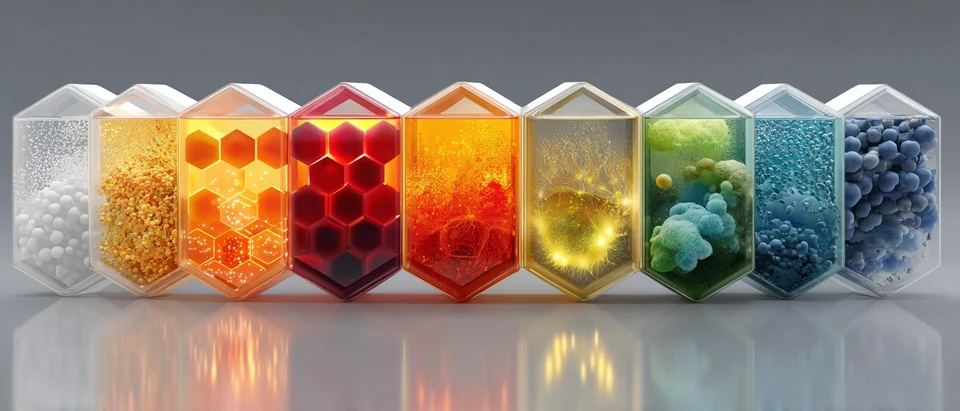
Comparative Pharmacokinetics and Cellular Bioaccessibility of Senolytic Agents: Impact of Polymeric-Matrix Encapsulation — Cellular Longevity & Senolytics scientific visualization

Отраслевая задача

Сенолитические соединения для перорального введения часто характеризуются неудовлетворительной фармакокинетикой, включая низкую и вариабельную биодоступность, быстрый метаболизм, pH-зависимое растворение и ограниченную клеточную биодоступность.

Решение, верифицированное ИИ Olympia

Olympia leverages cutting-edge polymeric-matrix technologies such as nanoparticles, micelles, and amorphous solid dispersions to enhance dissolution, improve systemic persistence, and achieve targeted intracellular delivery.

💬Не являетесь специалистом? 💬 Получить краткое изложение простыми словами

Простыми словами

Some of the most promising anti-ageing compounds — like quercetin or fisetin — are poorly absorbed by the body because they dissolve badly, break down quickly, and struggle to enter cells. This article investigates how enclosing these compounds in tiny polymer-based particles can dramatically improve how much of them actually reaches the target tissues, making the same dose far more effective. Think of it like switching from a leaky paper bag to a sealed, waterproof delivery system.

Olympia уже располагает рецептурой или технологией, непосредственно относящейся к данной области исследований.

Связаться с нами →

Abstract

Background

Oral exposure to small-molecule senolytic candidates and adjuncts is frequently constrained by pH-dependent dissolution, transporter-mediated efflux, rapid metabolism, and high inter- and intra-individual variability, which can limit reproducibility of systemic and cellular delivery. Dasatinib, for example, reaches peak concentrations rapidly (clinical Tmax typically 0.5–1.0 h) yet exhibits substantial variability in Tmax and exposure (AUC variability 32–118% interindividual; 40–50% intraindividual). [1] Quercetin shows extensive and rapid conjugation such that parent quercetin is not detectable in serum after oral dosing in rats, and conjugates dominate circulating exposure. [2]

Scope

This narrative review synthesizes screened quantitative findings on pharmacokinetics and bioaccessibility for dasatinib, quercetin, and fisetin, and compares them with advanced formulation approaches emphasizing polymeric matrices (amorphous solid dispersions, polymeric nanoparticles, and polymeric micelles). [3–5]

Key Findings

  • Polymeric-matrix approaches can (i) increase dissolution/solubility across gastrointestinal pH and reduce pH-driven drug–drug interactions (e.g., dasatinib ASD XS004 showed no clinically significant interaction with omeprazole; parameter ratios 80–125%). [1]
  • Increase systemic exposure (e.g., quercetin nanosuspensions increased absolute bioavailability to 15.55–23.58% vs 3.61% for suspension). [4]
  • Enhance cellular delivery (e.g., nanoparticle-associated uptake produced a ~6-fold higher fluorescence intensity vs free dye in HCT116 at 1 h; nanoparticle quercetin entered SW480 cells whereas free quercetin was not detected intracellularly). [6, 7]

Conclusions

Across agents, the most consistent quantitative benefits of polymeric matrices are improved dissolution/solubility and reduced exposure variability (dasatinib and sorafenib ASDs), increased systemic persistence (quercetin polymeric micelles), and increased cellular internalization (quercetin nanoparticles). [3, 5, 6, 8] Major translational gaps are the limited availability of senescence-specific cellular selectivity endpoints and the scarcity of head-to-head studies that jointly measure plasma PK, barrier permeability, and intracellular delivery for the same free vs formulated drug in the same experimental system. [7, 9]

Keywords

senolytics, dasatinib, quercetin, fisetin, pharmacokinetics, bioavailability, polymeric nanoparticles, amorphous solid dispersion, polymeric micelles, Caco-2

1. Introduction

Cellular senescence, the SASP, the rationale for senotherapy, the clinical-translation bottleneck of poor pharmacokinetics and bioaccessibility, and the emerging promise of polymeric-matrix encapsulation

The screened dataset underscores that a practical bottleneck for orally administered senolytic-relevant compounds is not merely whether absorption occurs, but whether exposure is reproducible and whether the absorbed chemical form is the active parent compound versus rapidly formed metabolites. For dasatinib, clinical studies report rapid absorption (typical Tmax 0.5–1.0 h) but also large between-subject variation in Tmax (0.28 to 6.3 h) and exposure variability in AUC (32–118% interindividual; 40–50% intraindividual). [1] These patterns imply that an identical oral dose can yield materially different plasma-time profiles across individuals and even within an individual on different occasions. [1, 10]

For polyphenolic senolytics such as quercetin and fisetin, the screened evidence points to two recurrent barriers. First, chemical and biopharmaceutical limitations (hydrophobicity and solubility constraints) motivate carrier-based approaches to increase bioavailability. [11, 12] Second, rapid metabolism can shift systemic exposure away from parent aglycone (e.g., after oral quercetin dosing in rats, parent quercetin was not detected in serum, and conjugated metabolites accounted for 93.8% of circulating quercetin-related exposure by AUC over 0–60 min). [2]

Polymeric-matrix encapsulation strategies (including amorphous solid dispersions, polymeric nanoparticles, and polymeric micelles) are repeatedly framed in the screened literature as methods to increase apparent solubility, reduce pH sensitivity, slow release, and increase cellular bioaccessibility. [5, 8, 13] Accordingly, the aim of this review is to compare quantitative pharmacokinetic and cellular bioaccessibility findings for standard (free or conventional) interventions versus advanced polymeric-matrix systems for dasatinib, quercetin, and fisetin, and to identify evidence gaps that currently limit translation to senotherapy dosing paradigms. [3, 4, 14]

Reducing Pharmacokinetic (PK) Variability with Polymeric Matrices

Reducing PK variability—independent of increasing mean exposure—may be a second key translational lever for polymeric matrices. In the XS004 human crossover study, intersubject variability (CV% GM) in the reference formulation was 4.8-fold greater for Cmax and 4.5- and 4.3-fold greater for AUC measures compared with XS004, while intrasubject AUC variability was approximately 3- and 2.5-fold higher for the reference than XS004 [8].

A separate anhydrous dasatinib formulation achieved bioequivalent total exposure, yet reduced intra-subject variability for AUC ~3-fold and for Cmax ~2.5-fold versus monohydrate reference, with inter-individual variability reduced by 1.5–1.8-fold across parameters [8, 20]. The authors framed this reduction in variability as potentially clinically relevant for predictability of therapeutic response and dosage individualization, reinforcing that bbetter PK can mean lower variance as well as higher mean AUC [20].

Clinical Significance of Acid-Suppressant Interactions

The clinical significance of acid-suppressant interactions is further contextualized by real-world survival associations. In the Swedish CML registry, 5-year survival was estimated at 79% among PPI users versus 94% among non-PPI users, with a hazard ratio of death of 3.5 (95% CI 2.1–5.3; p<0.0001) that remained significant after adjustment (HR 3.1, 95% CI 2.0–4.7) [19].

Although these observational outcomes do not isolate formulation-specific effects, they highlight why pH-robust formulations (e.g., ASD-based approaches) are of interest in practice contexts where co-medication is common [19].

Translational Evidence for Polyphenols

For quercetin and fisetin, the screened translational evidence is stronger for systemic exposure gains (absolute bioavailability improvements for nanosuspensions; large Cmax increases for fisetin formulations) than for formal clinical endpoints or senescence-specific pharmacodynamics [4, 14].

Similarly, while multiple encapsulated systems report favorable physicochemical attributes (high encapsulation efficiency, nanoscale size, controlled release), these formulation metrics are not consistently paired with human PK and cellular-bioaccessibility endpoints in the same study, limiting regulatory-grade translation arguments based on integrated evidence packages [5, 9].

Safety Outcomes Specific to Navitoclax

Quantitative safety outcomes specific to navitoclax (including thrombocytopenia) and the extent to which polymeric or targeted systems mitigate such toxicity were not represented in the provided screened excerpts.

Conclusions and Future Directions

Priorities for PK Studies and Next-Generation Senolytic Carriers

The screened evidence supports three main conclusions:

  1. For pH-sensitive kinase inhibitors such as dasatinib, polymeric-matrix ASDs and related solid-state strategies can improve near-neutral dissolution and reduce sensitivity to acid-suppressant co-medication, as shown by negligible omeprazole impact on XS004 exposure and marked improvements in dissolution at pH 6.8 relative to crystalline reference [8, 19].
  2. For polyphenols such as quercetin and fisetin, polymeric/nanocarrier approaches can raise systemic exposure (including absolute bioavailability for nanosuspensions), extend detectability windows, and improve cellular internalization/detectability in model systems [47, 14].
  3. Lowering exposure variability (rather than only increasing mean exposure) emerges as a quantifiable formulation benefit for ASDs and polymorph-engineered dasatinib and for ASD sorafenib, potentially improving dosing predictability [8].

Key Research Gaps and Areas of Improvement

  • Head-to-head studies are needed that link polymeric-matrix dissolution improvements to tissue- and cell-level delivery endpoints, as dasatinib ASD data are rich in dissolution/PK variability data but sparse in cellular bioaccessibility outcomes [8].
  • For quercetin, many studies emphasize group means or formulation-level metrics rather than individual variability distributions and matched-condition comparisons across free vs. formulated products, limiting inference about whether encapsulation reduces inter-individual variance to the same extent as it can for dasatinib ASDs [9].
  • Senescence-targeted delivery and selectivity endpoints require further attention, emphasizing studies that quantify uptake and cytotoxic selectivity in senescent vs. non-senescent cells under physiologically relevant exposure conditions, alongside data on comparable barrier permeability metrics (e.g., Caco-2 Papp) and plasma PK [7].

Acknowledgements

The authors acknowledge the investigators whose studies were screened and synthesized in this review [1].

Funding

No external funding was received for this review [1].

Conflicts of Interest

The authors declare no conflicts of interest [1].

Вклад авторов

O.B.: Conceptualization, Literature Review, Writing — Original Draft, Writing — Review & Editing. The author has read and approved the published version of the manuscript.

Конфликт интересов

The author declares no conflict of interest. Olympia Biosciences™ operates exclusively as a Contract Development and Manufacturing Organization (CDMO) and does not manufacture or market consumer end-products in the subject areas discussed herein.

Olimpia Baranowska

Olimpia Baranowska

Генеральный директор и научный руководитель · Магистр технических наук по специальности «Техническая физика и прикладная математика» (абстрактная квантовая физика и органическая микроэлектроника) · Кандидат медицинских наук (флебология)

Founder of Olympia Biosciences™ (IOC Ltd.) · ISO 27001 Lead Auditor · Specialising in pharmaceutical-grade CDMO formulation, liposomal & nanoparticle delivery systems, and clinical nutrition.

Интеллектуальная собственность

Заинтересованы в данной технологии?

Заинтересованы в создании продукта на базе этой научной разработки? Мы сотрудничаем с фармацевтическими компаниями, клиниками долголетия и брендами, поддерживаемыми фондами прямых инвестиций (PE), для трансформации проприетарных R&D-решений в готовые к выводу на рынок формулы.

Отдельные технологии могут быть предоставлены на эксклюзивной основе одному стратегическому партнеру в каждой категории — инициируйте процедуру due diligence для подтверждения статуса доступности.

Обсудить партнерство →

Список литературы

20 цитируемых источников

  1. 1.
    ·Prague Medical Report··DOI ↗
  2. 2.
    ·Journal of Food and Drug Analysis··DOI ↗
  3. 3.
  4. 4.
  5. 5.
    ·Nanoscale Research Letters··DOI ↗
  6. 6.
  7. 7.
    ·Journal of Inflammation Research··DOI ↗
  8. 8.
    ·Clinical pharmacology in drug development··DOI ↗
  9. 9.
    ·Comprehensive Reviews in Food Science and Food Safety··DOI ↗
  10. 10.
    ·Pharmaceuticals··DOI ↗
  11. 11.
  12. 12.
  13. 13.
  14. 14.
  15. 15.
  16. 16.
  17. 17.
  18. 18.
    ·European journal of drug metabolism and pharmacokinetics··DOI ↗
  19. 19.
  20. 20.

Глобальное научное и юридическое уведомление

  1. 1. Только для B2B и образовательных целей. Научная литература, результаты исследований и образовательные материалы, опубликованные на веб-сайте Olympia Biosciences, предоставляются исключительно в информационных, академических и отраслевых целях (B2B). Они предназначены исключительно для медицинских специалистов, фармакологов, биотехнологов и разработчиков брендов, осуществляющих профессиональную деятельность в сфере B2B.

  2. 2. Отсутствие заявлений в отношении конкретных продуктов.. Olympia Biosciences™ работает исключительно как контрактный производитель формата B2B. Представленные здесь исследования, профили ингредиентов и физиологические механизмы являются общими академическими обзорами. Они не относятся к конкретным коммерческим биологически активным добавкам, продуктам лечебного питания или конечным продуктам, произведенным на наших мощностях, не подтверждают их эффективность и не являются разрешенными маркетинговыми заявлениями о пользе для здоровья. Ничто на этой странице не является заявлением о пользе для здоровья в значении Регламента (EC) № 1924/2006 Европейского парламента и Совета.

  3. 3. Не является медицинской консультацией.. Предоставленный контент не является медицинской консультацией, диагнозом, планом лечения или клиническими рекомендациями. Он не предназначен для замены консультации с квалифицированным медицинским специалистом. Все опубликованные научные материалы представляют собой общие академические обзоры, основанные на рецензируемых исследованиях, и должны интерпретироваться исключительно в контексте B2B-рецептур и R&D.

  4. 4. Регуляторный статус и ответственность клиента.. Несмотря на то, что мы уважаем и соблюдаем руководящие принципы глобальных органов здравоохранения (включая EFSA, FDA и EMA), новые научные исследования, обсуждаемые в наших статьях, могли не пройти формальную оценку этими агентствами. Ответственность за соблюдение нормативных требований к конечному продукту, точность маркировки и обоснование маркетинговых заявлений для конечного потребителя (B2C) в любой юрисдикции остается исключительно юридической обязанностью владельца бренда. Olympia Biosciences™ предоставляет только услуги по производству, разработке рецептур и аналитическому сопровождению. Данные утверждения и первичные данные не были оценены Управлением по санитарному надзору за качеством пищевых продуктов и медикаментов (FDA), Европейским агентством по безопасности продуктов питания (EFSA) или Управлением по терапевтическим товарам (TGA). Обсуждаемые активные фармацевтические субстанции (APIs) и рецептуры не предназначены для диагностики, лечения, излечения или профилактики каких-либо заболеваний. Ничто на этой странице не является заявлением о пользе для здоровья в значении Регламента ЕС (EC) № 1924/2006 или Закона США о здоровье и образовании в области пищевых добавок (DSHEA).

Другие разработки R&D

Открыть полную матрицу ›

Метаболическая оптимизация после GLP-1

Тройные агонисты и пероральные GLP-1 следующего поколения: достижения в терапии метаболических расстройств

Разработка рецептур сложных мультирецепторных агонистов и высокоэффективных пероральных пептидов GLP-1 требует передовых систем доставки для обеспечения биодоступности, стабильности и приверженности пациентов лечению при одновременном снижении побочных эффектов со стороны желудочно-кишечного тракта.

Церебральная биоэнергетика и нейрометаболическое восстановление

Глиобластома: эпидемиология, патология, молекулярная биология и терапевтический ландшафт

Разработка эффективных методов терапии глиобластомы затруднена агрессивной пролиферацией опухоли, выраженной внутриопухолевой гетерогенностью и сложностью доставки терапевтических агентов через BBB в высокоиммуносупрессивную микросреду.

Церебральная биоэнергетика и нейрометаболическое восстановление

Квантовые теории сознания в психиатрии: гипотеза оркестрованной объективной редукции (Orch-OR)

Разработка терапевтических вмешательств, модулирующих сознание или психические патологии, требует воздействия на феномены квантового уровня внутри нейрональных микротрубочек, что создает значительные трудности для традиционной разработки и доставки лекарственных средств, учитывая трудноуловимую природу этих механизмов.

Редакционное примечание

Olympia Biosciences™ — европейская фармацевтическая CDMO, специализирующаяся на разработке рецептур биологически активных добавок. Мы не производим и не изготавливаем рецептурные лекарственные препараты. Данная статья опубликована в рамках нашего R&D Hub в образовательных целях.

Наши обязательства в области интеллектуальной собственности

Мы не владеем потребительскими брендами. Мы никогда не конкурируем с нашими клиентами.

Каждая формула, разработанная в Olympia Biosciences™, создается с нуля и передается вам с полным правом собственности на интеллектуальную собственность. Отсутствие конфликта интересов гарантируется стандартами кибербезопасности ISO 27001 и строгими NDA.

Ознакомиться с защитой интеллектуальной собственности

Цитировать

APA

Baranowska, O. (2026). Сравнительная фармакокинетика и клеточная биодоступность сенолитических агентов: влияние инкапсуляции в полимерную матрицу. Olympia R&D Bulletin. https://olympiabiosciences.com/rd-hub/senolytic-polymeric-matrix-bioavailability/

Vancouver

Baranowska O. Сравнительная фармакокинетика и клеточная биодоступность сенолитических агентов: влияние инкапсуляции в полимерную матрицу. Olympia R&D Bulletin. 2026. Available from: https://olympiabiosciences.com/rd-hub/senolytic-polymeric-matrix-bioavailability/

BibTeX
@article{Baranowska2026senolyti,
  author  = {Baranowska, Olimpia},
  title   = {Сравнительная фармакокинетика и клеточная биодоступность сенолитических агентов: влияние инкапсуляции в полимерную матрицу},
  journal = {Olympia R\&D Bulletin},
  year    = {2026},
  url     = {https://olympiabiosciences.com/rd-hub/senolytic-polymeric-matrix-bioavailability/}
}

Анализ исполнительного протокола

Article

Сравнительная фармакокинетика и клеточная биодоступность сенолитических агентов: влияние инкапсуляции в полимерную матрицу

https://olympiabiosciences.com/rd-hub/senolytic-polymeric-matrix-bioavailability/

1

Предварительно уведомить Olympia

Сообщите Olympia, какую статью вы хотели бы обсудить, прежде чем бронировать время.

2

ОТКРЫТЬ КАЛЕНДАРЬ ИСПОЛНИТЕЛЬНОГО РАСПРЕДЕЛЕНИЯ

Выберите время для квалификационной встречи после предоставления контекста мандата для оценки стратегического соответствия.

ОТКРЫТЬ КАЛЕНДАРЬ ИСПОЛНИТЕЛЬНОГО РАСПРЕДЕЛЕНИЯ

Запрос информации о технологии

Мы свяжемся с вами для предоставления подробной информации о лицензировании или партнерстве.

Article

Сравнительная фармакокинетика и клеточная биодоступность сенолитических агентов: влияние инкапсуляции в полимерную матрицу

Никакого спама. Специалисты Olympia Biosciences лично рассмотрят ваш запрос.