บทความบรรณาธิการOpen Accessตรวจสอบโดยผู้เชี่ยวชาญความอายุยืนของเซลล์และสารเซโนลิติก

การศึกษาเปรียบเทียบเภสัชจลนศาสตร์และการเข้าถึงทางชีวภาพในระดับเซลล์ของสารเซโนลิติก: ผลกระทบของการห่อหุ้มด้วยพอลิเมอร์เมทริกซ์

เผยแพร่เมื่อ: 3 May 2026·Olympia R&D Bulletin·Permalink: olympiabiosciences.com/rd-hub/senolytic-polymeric-matrix-bioavailability/·20 แหล่งอ้างอิง·≈ 6 นาทีที่อ่าน
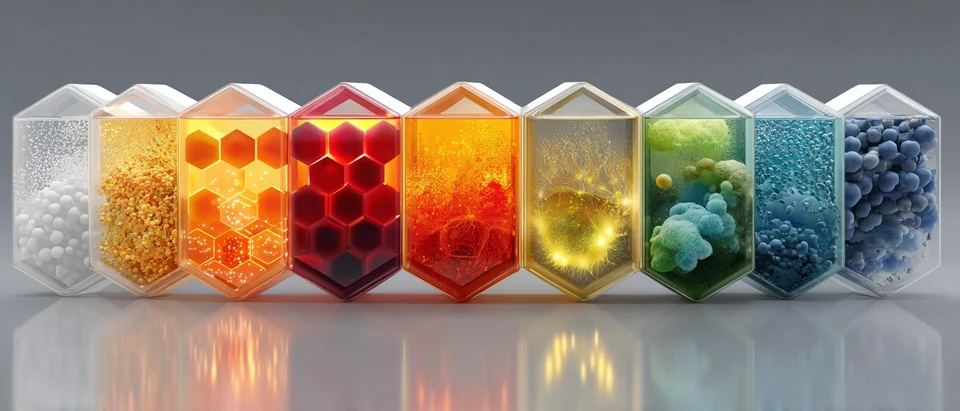
Comparative Pharmacokinetics and Cellular Bioaccessibility of Senolytic Agents: Impact of Polymeric-Matrix Encapsulation — Cellular Longevity & Senolytics scientific visualization

ความท้าทายในอุตสาหกรรม

สารประกอบเซโนลิติกที่บริหารโดยการรับประทานมักประสบปัญหาด้านเภสัชจลนศาสตร์ที่ไม่ดี รวมถึงการดูดซึมเข้าสู่ร่างกายที่ต่ำและมีความแปรปรวน การเผาผลาญที่รวดเร็ว การละลายที่ขึ้นกับค่า pH และการเข้าถึงทางชีวภาพในระดับเซลล์ที่จำกัด

โซลูชันที่ผ่านการตรวจสอบด้วย Olympia AI

Olympia leverages cutting-edge polymeric-matrix technologies such as nanoparticles, micelles, and amorphous solid dispersions to enhance dissolution, improve systemic persistence, and achieve targeted intracellular delivery.

💬หากคุณไม่ใช่ผู้เชี่ยวชาญ 💬 รับสรุปเนื้อหาภาษาที่เข้าใจง่าย

สรุปเนื้อหาภาษาที่เข้าใจง่าย

Some of the most promising anti-ageing compounds — like quercetin or fisetin — are poorly absorbed by the body because they dissolve badly, break down quickly, and struggle to enter cells. This article investigates how enclosing these compounds in tiny polymer-based particles can dramatically improve how much of them actually reaches the target tissues, making the same dose far more effective. Think of it like switching from a leaky paper bag to a sealed, waterproof delivery system.

Olympia มีสูตรตำรับหรือเทคโนโลยีที่ตอบโจทย์งานวิจัยด้านนี้โดยตรง

ติดต่อเรา →

Abstract

Background

Oral exposure to small-molecule senolytic candidates and adjuncts is frequently constrained by pH-dependent dissolution, transporter-mediated efflux, rapid metabolism, and high inter- and intra-individual variability, which can limit reproducibility of systemic and cellular delivery. Dasatinib, for example, reaches peak concentrations rapidly (clinical Tmax typically 0.5–1.0 h) yet exhibits substantial variability in Tmax and exposure (AUC variability 32–118% interindividual; 40–50% intraindividual). [1] Quercetin shows extensive and rapid conjugation such that parent quercetin is not detectable in serum after oral dosing in rats, and conjugates dominate circulating exposure. [2]

Scope

This narrative review synthesizes screened quantitative findings on pharmacokinetics and bioaccessibility for dasatinib, quercetin, and fisetin, and compares them with advanced formulation approaches emphasizing polymeric matrices (amorphous solid dispersions, polymeric nanoparticles, and polymeric micelles). [3–5]

Key Findings

  • Polymeric-matrix approaches can (i) increase dissolution/solubility across gastrointestinal pH and reduce pH-driven drug–drug interactions (e.g., dasatinib ASD XS004 showed no clinically significant interaction with omeprazole; parameter ratios 80–125%). [1]
  • Increase systemic exposure (e.g., quercetin nanosuspensions increased absolute bioavailability to 15.55–23.58% vs 3.61% for suspension). [4]
  • Enhance cellular delivery (e.g., nanoparticle-associated uptake produced a ~6-fold higher fluorescence intensity vs free dye in HCT116 at 1 h; nanoparticle quercetin entered SW480 cells whereas free quercetin was not detected intracellularly). [6, 7]

Conclusions

Across agents, the most consistent quantitative benefits of polymeric matrices are improved dissolution/solubility and reduced exposure variability (dasatinib and sorafenib ASDs), increased systemic persistence (quercetin polymeric micelles), and increased cellular internalization (quercetin nanoparticles). [3, 5, 6, 8] Major translational gaps are the limited availability of senescence-specific cellular selectivity endpoints and the scarcity of head-to-head studies that jointly measure plasma PK, barrier permeability, and intracellular delivery for the same free vs formulated drug in the same experimental system. [7, 9]

Keywords

senolytics, dasatinib, quercetin, fisetin, pharmacokinetics, bioavailability, polymeric nanoparticles, amorphous solid dispersion, polymeric micelles, Caco-2

1. Introduction

Cellular senescence, the SASP, the rationale for senotherapy, the clinical-translation bottleneck of poor pharmacokinetics and bioaccessibility, and the emerging promise of polymeric-matrix encapsulation

The screened dataset underscores that a practical bottleneck for orally administered senolytic-relevant compounds is not merely whether absorption occurs, but whether exposure is reproducible and whether the absorbed chemical form is the active parent compound versus rapidly formed metabolites. For dasatinib, clinical studies report rapid absorption (typical Tmax 0.5–1.0 h) but also large between-subject variation in Tmax (0.28 to 6.3 h) and exposure variability in AUC (32–118% interindividual; 40–50% intraindividual). [1] These patterns imply that an identical oral dose can yield materially different plasma-time profiles across individuals and even within an individual on different occasions. [1, 10]

For polyphenolic senolytics such as quercetin and fisetin, the screened evidence points to two recurrent barriers. First, chemical and biopharmaceutical limitations (hydrophobicity and solubility constraints) motivate carrier-based approaches to increase bioavailability. [11, 12] Second, rapid metabolism can shift systemic exposure away from parent aglycone (e.g., after oral quercetin dosing in rats, parent quercetin was not detected in serum, and conjugated metabolites accounted for 93.8% of circulating quercetin-related exposure by AUC over 0–60 min). [2]

Polymeric-matrix encapsulation strategies (including amorphous solid dispersions, polymeric nanoparticles, and polymeric micelles) are repeatedly framed in the screened literature as methods to increase apparent solubility, reduce pH sensitivity, slow release, and increase cellular bioaccessibility. [5, 8, 13] Accordingly, the aim of this review is to compare quantitative pharmacokinetic and cellular bioaccessibility findings for standard (free or conventional) interventions versus advanced polymeric-matrix systems for dasatinib, quercetin, and fisetin, and to identify evidence gaps that currently limit translation to senotherapy dosing paradigms. [3, 4, 14]

Reducing Pharmacokinetic (PK) Variability with Polymeric Matrices

Reducing PK variability—independent of increasing mean exposure—may be a second key translational lever for polymeric matrices. In the XS004 human crossover study, intersubject variability (CV% GM) in the reference formulation was 4.8-fold greater for Cmax and 4.5- and 4.3-fold greater for AUC measures compared with XS004, while intrasubject AUC variability was approximately 3- and 2.5-fold higher for the reference than XS004 [8].

A separate anhydrous dasatinib formulation achieved bioequivalent total exposure, yet reduced intra-subject variability for AUC ~3-fold and for Cmax ~2.5-fold versus monohydrate reference, with inter-individual variability reduced by 1.5–1.8-fold across parameters [8, 20]. The authors framed this reduction in variability as potentially clinically relevant for predictability of therapeutic response and dosage individualization, reinforcing that bbetter PK can mean lower variance as well as higher mean AUC [20].

Clinical Significance of Acid-Suppressant Interactions

The clinical significance of acid-suppressant interactions is further contextualized by real-world survival associations. In the Swedish CML registry, 5-year survival was estimated at 79% among PPI users versus 94% among non-PPI users, with a hazard ratio of death of 3.5 (95% CI 2.1–5.3; p<0.0001) that remained significant after adjustment (HR 3.1, 95% CI 2.0–4.7) [19].

Although these observational outcomes do not isolate formulation-specific effects, they highlight why pH-robust formulations (e.g., ASD-based approaches) are of interest in practice contexts where co-medication is common [19].

Translational Evidence for Polyphenols

For quercetin and fisetin, the screened translational evidence is stronger for systemic exposure gains (absolute bioavailability improvements for nanosuspensions; large Cmax increases for fisetin formulations) than for formal clinical endpoints or senescence-specific pharmacodynamics [4, 14].

Similarly, while multiple encapsulated systems report favorable physicochemical attributes (high encapsulation efficiency, nanoscale size, controlled release), these formulation metrics are not consistently paired with human PK and cellular-bioaccessibility endpoints in the same study, limiting regulatory-grade translation arguments based on integrated evidence packages [5, 9].

Safety Outcomes Specific to Navitoclax

Quantitative safety outcomes specific to navitoclax (including thrombocytopenia) and the extent to which polymeric or targeted systems mitigate such toxicity were not represented in the provided screened excerpts.

Conclusions and Future Directions

Priorities for PK Studies and Next-Generation Senolytic Carriers

The screened evidence supports three main conclusions:

  1. For pH-sensitive kinase inhibitors such as dasatinib, polymeric-matrix ASDs and related solid-state strategies can improve near-neutral dissolution and reduce sensitivity to acid-suppressant co-medication, as shown by negligible omeprazole impact on XS004 exposure and marked improvements in dissolution at pH 6.8 relative to crystalline reference [8, 19].
  2. For polyphenols such as quercetin and fisetin, polymeric/nanocarrier approaches can raise systemic exposure (including absolute bioavailability for nanosuspensions), extend detectability windows, and improve cellular internalization/detectability in model systems [47, 14].
  3. Lowering exposure variability (rather than only increasing mean exposure) emerges as a quantifiable formulation benefit for ASDs and polymorph-engineered dasatinib and for ASD sorafenib, potentially improving dosing predictability [8].

Key Research Gaps and Areas of Improvement

  • Head-to-head studies are needed that link polymeric-matrix dissolution improvements to tissue- and cell-level delivery endpoints, as dasatinib ASD data are rich in dissolution/PK variability data but sparse in cellular bioaccessibility outcomes [8].
  • For quercetin, many studies emphasize group means or formulation-level metrics rather than individual variability distributions and matched-condition comparisons across free vs. formulated products, limiting inference about whether encapsulation reduces inter-individual variance to the same extent as it can for dasatinib ASDs [9].
  • Senescence-targeted delivery and selectivity endpoints require further attention, emphasizing studies that quantify uptake and cytotoxic selectivity in senescent vs. non-senescent cells under physiologically relevant exposure conditions, alongside data on comparable barrier permeability metrics (e.g., Caco-2 Papp) and plasma PK [7].

Acknowledgements

The authors acknowledge the investigators whose studies were screened and synthesized in this review [1].

Funding

No external funding was received for this review [1].

Conflicts of Interest

The authors declare no conflicts of interest [1].

การมีส่วนร่วมของผู้เขียน

O.B.: Conceptualization, Literature Review, Writing — Original Draft, Writing — Review & Editing. The author has read and approved the published version of the manuscript.

ผลประโยชน์ทับซ้อน

The author declares no conflict of interest. Olympia Biosciences™ operates exclusively as a Contract Development and Manufacturing Organization (CDMO) and does not manufacture or market consumer end-products in the subject areas discussed herein.

Olimpia Baranowska

Olimpia Baranowska

ประธานเจ้าหน้าที่บริหารและผู้อำนวยการฝ่ายวิทยาศาสตร์ · วท.ม. วิศวกรรมศาสตร์ สาขาฟิสิกส์เทคนิคและคณิตศาสตร์ประยุกต์ (ฟิสิกส์ควอนตัมเชิงนามธรรมและไมโครอิเล็กทรอนิกส์อินทรีย์) · นักศึกษาปริญญาเอกสาขาวิทยาศาสตร์การแพทย์ (เวชศาสตร์หลอดเลือดดำ)

Founder of Olympia Biosciences™ (IOC Ltd.) · ISO 27001 Lead Auditor · Specialising in pharmaceutical-grade CDMO formulation, liposomal & nanoparticle delivery systems, and clinical nutrition.

ทรัพย์สินทางปัญญาเฉพาะ

สนใจเทคโนโลยีนี้หรือไม่?

หากคุณสนใจพัฒนาผลิตภัณฑ์จากองค์ความรู้ทางวิทยาศาสตร์นี้ เราพร้อมร่วมงานกับบริษัทเภสัชกรรม คลินิกชะลอวัย และแบรนด์ที่ได้รับการสนับสนุนจาก PE เพื่อเปลี่ยนงานวิจัยและพัฒนาที่เป็นกรรมสิทธิ์ของเราให้เป็นสูตรตำรับที่พร้อมออกสู่ตลาด

เทคโนโลยีบางรายการอาจเปิดให้สิทธิ์การใช้งานแบบเอกสิทธิ์เฉพาะแก่พันธมิตรเชิงกลยุทธ์หนึ่งรายต่อหมวดหมู่ โปรดเริ่มกระบวนการตรวจสอบสถานะ (due diligence) เพื่อยืนยันสถานะการจัดสรร

หารือเกี่ยวกับความร่วมมือ →

เอกสารอ้างอิง

20 แหล่งอ้างอิง

  1. 1.
    ·Prague Medical Report··DOI ↗
  2. 2.
    ·Journal of Food and Drug Analysis··DOI ↗
  3. 3.
  4. 4.
  5. 5.
    ·Nanoscale Research Letters··DOI ↗
  6. 6.
  7. 7.
    ·Journal of Inflammation Research··DOI ↗
  8. 8.
    ·Clinical pharmacology in drug development··DOI ↗
  9. 9.
    ·Comprehensive Reviews in Food Science and Food Safety··DOI ↗
  10. 10.
    ·Pharmaceuticals··DOI ↗
  11. 11.
  12. 12.
  13. 13.
  14. 14.
  15. 15.
  16. 16.
  17. 17.
  18. 18.
    ·European journal of drug metabolism and pharmacokinetics··DOI ↗
  19. 19.
  20. 20.

ข้อสงวนสิทธิ์ทางวิทยาศาสตร์และกฎหมายระดับโลก

  1. 1. สำหรับวัตถุประสงค์ด้าน B2B และการศึกษาเท่านั้น. เอกสารทางวิชาการ ข้อมูลเชิงลึกด้านการวิจัย และสื่อการเรียนรู้ที่เผยแพร่บนเว็บไซต์ของ Olympia Biosciences จัดทำขึ้นเพื่อวัตถุประสงค์ในการให้ข้อมูลเชิงวิชาการและการอ้างอิงในระดับธุรกิจ (B2B) เท่านั้น โดยมีกลุ่มเป้าหมายเป็นบุคลากรทางการแพทย์ เภสัชกร นักเทคโนโลยีชีวภาพ และนักพัฒนาผลิตภัณฑ์ที่ดำเนินงานในระดับธุรกิจ B2B

  2. 2. ไม่มีการกล่าวอ้างสรรพคุณเฉพาะสำหรับผลิตภัณฑ์. Olympia Biosciences™ ดำเนินธุรกิจในฐานะผู้รับจ้างผลิตแบบ B2B แต่เพียงผู้เดียว ข้อมูลการวิจัย ข้อมูลเฉพาะของส่วนประกอบ และกลไกทางสรีรวิทยาที่กล่าวถึงในที่นี้เป็นเพียงภาพรวมทางวิชาการทั่วไปเท่านั้น ข้อมูลดังกล่าวไม่ได้อ้างอิง รับรอง หรือถือเป็นการกล่าวอ้างสรรพคุณทางสุขภาพเพื่อการพาณิชย์สำหรับผลิตภัณฑ์เสริมอาหาร อาหารทางการแพทย์ หรือผลิตภัณฑ์สำเร็จรูปใดๆ ที่ผลิตในโรงงานของเรา เนื้อหาในหน้านี้ไม่ถือเป็นการกล่าวอ้างสรรพคุณทางสุขภาพตามความหมายของกฎระเบียบ (EC) No 1924/2006 ของรัฐสภายุโรปและคณะมนตรี

  3. 3. ไม่ใช่คำแนะนำทางการแพทย์. เนื้อหาที่นำเสนอไม่ถือเป็นคำแนะนำทางการแพทย์ การวินิจฉัย การรักษา หรือข้อเสนอแนะทางคลินิก และไม่ได้มีวัตถุประสงค์เพื่อทดแทนการปรึกษาผู้เชี่ยวชาญด้านสุขภาพที่มีคุณสมบัติเหมาะสม เอกสารทางวิทยาศาสตร์ทั้งหมดที่เผยแพร่เป็นเพียงภาพรวมทางวิชาการทั่วไปที่อ้างอิงจากการวิจัยที่ผ่านการตรวจสอบโดยผู้ทรงคุณวุฒิ (peer-reviewed) และควรตีความในบริบทของการพัฒนาสูตรตำรับและการวิจัยและพัฒนา (R&D) ในระดับ B2B เท่านั้น

  4. 4. สถานะทางกฎระเบียบและความรับผิดชอบของลูกค้า. แม้ว่าเราจะเคารพและดำเนินงานภายใต้แนวทางของหน่วยงานด้านสุขภาพระดับโลก (รวมถึง EFSA, FDA และ EMA) แต่งานวิจัยทางวิทยาศาสตร์ที่นำเสนอในบทความของเราอาจยังไม่ได้รับการประเมินอย่างเป็นทางการจากหน่วยงานเหล่านี้ ความรับผิดชอบทางกฎหมายแต่เพียงผู้เดียวในการปฏิบัติตามกฎระเบียบของผลิตภัณฑ์ขั้นสุดท้าย ความถูกต้องของฉลาก และการพิสูจน์คำกล่าวอ้างทางการตลาดแบบ B2C ในเขตอำนาจศาลใดๆ ยังคงเป็นของเจ้าของแบรนด์ Olympia Biosciences™ ให้บริการเฉพาะด้านการผลิต การคิดค้นสูตร และการวิเคราะห์เท่านั้น ข้อความและข้อมูลดิบเหล่านี้ยังไม่ได้รับการประเมินโดยองค์การอาหารและยา (FDA), หน่วยงานความปลอดภัยด้านอาหารแห่งยุโรป (EFSA) หรือหน่วยงานกำกับดูแลผลิตภัณฑ์เพื่อสุขภาพ (TGA) วัตถุดิบทางเภสัชกรรม (APIs) และสูตรตำรับที่กล่าวถึงไม่ได้มีวัตถุประสงค์เพื่อวินิจฉัย บำบัด รักษา หรือป้องกันโรคใดๆ เนื้อหาในหน้านี้ไม่ถือเป็นการกล่าวอ้างสรรพคุณทางสุขภาพตามความหมายของกฎระเบียบ EU (EC) No 1924/2006 หรือกฎหมายว่าด้วยสุขภาพและการศึกษาผลิตภัณฑ์เสริมอาหาร (DSHEA) ของสหรัฐอเมริกา

สำรวจสูตรตำรับด้านการวิจัยและพัฒนาอื่นๆ

ดูตารางข้อมูลทั้งหมด ›

พลศาสตร์การไหลเวียนของเลือดในหลอดเลือดฝอยและความสมบูรณ์ของเซลล์บุผนังหลอดเลือด

แง่มุมร่วมระหว่างฟิสิกส์ควอนตัมและวิทยาระบบหลอดเลือดดำ: การทบทวนวรรณกรรม

การพัฒนาเทคโนโลยีการสลายด้วยเลเซอร์ที่ปรับความยาวคลื่นให้เหมาะสมและรูปแบบการสร้างภาพขั้นสูงสำหรับวิทยาระบบหลอดเลือดดำ จำเป็นต้องมีความเข้าใจอย่างลึกซึ้งเกี่ยวกับปฏิสัมพันธ์ระหว่างโฟตอนและเนื้อเยื่อและปรากฏการณ์ควอนตัมที่ซับซ้อน ซึ่งก่อให้เกิดอุปสรรคสำคัญด้านวิศวกรรมและวัสดุศาสตร์เพื่อให้ได้ผลลัพธ์ทางคลินิกที่สม่ำเสมอ

Precision Microbiome & Gut-Brain Axis

Pharmacomicrobiomics: การปรับสมดุลจุลินทรีย์ในลำไส้ต่อประสิทธิภาพของยาและการเปลี่ยนแปลงทางชีวภาพของผลิตภัณฑ์เสริมอาหารเชิงยา

การบูรณาการความสามารถในการเผาผลาญที่ลึกซึ้งและแปรผันของจุลินทรีย์ในลำไส้เข้าสู่การพัฒนาเภสัชภัณฑ์ เพื่อให้มั่นใจในประสิทธิภาพของยาและ bioavailability ที่สม่ำเสมอในกลุ่มผู้ป่วยที่หลากหลาย ถือเป็นอุปสรรคสำคัญ

กลไกการป้องกันภายในเซลล์และทางเลือกทดแทนรูปแบบ IV

เทคโนโลยี Raman Spectroscopy แบบไม่ทำลายตัวอย่าง เพื่อการตรวจวัดสารปนเปื้อนในวัตถุดิบจากพืชตามมาตรฐาน PAT

การรับประกันการควบคุมคุณภาพแบบ Real-time ของ Botanical APIs มีอุปสรรคจากความจำเป็นในการตรวจวัดสารปนเปื้อนในปริมาณน้อย เช่น สารพิษตกค้างจากยาฆ่าแมลงหรือสารปลอมปน ในเมทริกซ์พฤกษเคมีที่มีความหลากหลาย (heterogeneous botanical matrices) ในขณะที่ต้องเป็นไปตามข้อกำหนดด้านความไวในการตรวจวัดของหน่วยงานกำกับดูแล

คำชี้แจงด้านบรรณาธิการ

Olympia Biosciences™ เป็นบริษัท CDMO เภสัชกรรมจากยุโรปที่เชี่ยวชาญด้านการคิดค้นสูตรผลิตภัณฑ์เสริมอาหารแบบเฉพาะทาง เราไม่ได้ผลิตหรือปรุงยาตามใบสั่งแพทย์ บทความนี้เผยแพร่เป็นส่วนหนึ่งของ R&D Hub เพื่อวัตถุประสงค์ทางการศึกษาเท่านั้น

คำมั่นสัญญาด้านทรัพย์สินทางปัญญาของเรา

เราไม่ได้เป็นเจ้าของแบรนด์สินค้าอุปโภคบริโภค และเราไม่เคยแข่งขันกับลูกค้าของเรา

ทุกสูตรตำรับที่พัฒนาโดย Olympia Biosciences™ ถูกสร้างขึ้นใหม่ตั้งแต่ต้นและส่งมอบให้แก่คุณพร้อมสิทธิ์ความเป็นเจ้าของในทรัพย์สินทางปัญญาอย่างเต็มรูปแบบ ปราศจากความขัดแย้งทางผลประโยชน์ รับประกันด้วยมาตรฐานความปลอดภัยทางไซเบอร์ ISO 27001 และข้อตกลงรักษาความลับ (NDA) ที่รัดกุม

สำรวจการคุ้มครองทรัพย์สินทางปัญญา

อ้างอิง

APA

Baranowska, O. (2026). การศึกษาเปรียบเทียบเภสัชจลนศาสตร์และการเข้าถึงทางชีวภาพในระดับเซลล์ของสารเซโนลิติก: ผลกระทบของการห่อหุ้มด้วยพอลิเมอร์เมทริกซ์. Olympia R&D Bulletin. https://olympiabiosciences.com/rd-hub/senolytic-polymeric-matrix-bioavailability/

Vancouver

Baranowska O. การศึกษาเปรียบเทียบเภสัชจลนศาสตร์และการเข้าถึงทางชีวภาพในระดับเซลล์ของสารเซโนลิติก: ผลกระทบของการห่อหุ้มด้วยพอลิเมอร์เมทริกซ์. Olympia R&D Bulletin. 2026. Available from: https://olympiabiosciences.com/rd-hub/senolytic-polymeric-matrix-bioavailability/

BibTeX
@article{Baranowska2026senolyti,
  author  = {Baranowska, Olimpia},
  title   = {การศึกษาเปรียบเทียบเภสัชจลนศาสตร์และการเข้าถึงทางชีวภาพในระดับเซลล์ของสารเซโนลิติก: ผลกระทบของการห่อหุ้มด้วยพอลิเมอร์เมทริกซ์},
  journal = {Olympia R\&D Bulletin},
  year    = {2026},
  url     = {https://olympiabiosciences.com/rd-hub/senolytic-polymeric-matrix-bioavailability/}
}

การทบทวนระเบียบวิธีระดับบริหาร

Article

การศึกษาเปรียบเทียบเภสัชจลนศาสตร์และการเข้าถึงทางชีวภาพในระดับเซลล์ของสารเซโนลิติก: ผลกระทบของการห่อหุ้มด้วยพอลิเมอร์เมทริกซ์

https://olympiabiosciences.com/rd-hub/senolytic-polymeric-matrix-bioavailability/

1

ส่งข้อความถึง Olimpia ก่อน

โปรดแจ้งให้ Olimpia ทราบถึงบทความที่คุณต้องการหารือล่วงหน้าก่อนทำการจองเวลา

2

เปิดปฏิทินการจัดสรรเวลาสำหรับผู้บริหาร

เลือกช่วงเวลาสำหรับการคัดกรองหลังจากส่งข้อมูลบริบทของโครงการ เพื่อจัดลำดับความสำคัญให้สอดคล้องกับกลยุทธ์

เปิดปฏิทินการจัดสรรเวลาสำหรับผู้บริหาร

แสดงความสนใจในเทคโนโลยีนี้

เราจะติดต่อกลับพร้อมรายละเอียดเกี่ยวกับการอนุญาตให้ใช้สิทธิ์หรือความร่วมมือทางธุรกิจ

Article

การศึกษาเปรียบเทียบเภสัชจลนศาสตร์และการเข้าถึงทางชีวภาพในระดับเซลล์ของสารเซโนลิติก: ผลกระทบของการห่อหุ้มด้วยพอลิเมอร์เมทริกซ์

ปราศจากสแปม Olympia จะดำเนินการตรวจสอบความสนใจของคุณเป็นการส่วนตัว