ضبط الإجهاد اللاإرادي بواسطة العوامل المغذية والموجهة للميكروبيوتا والحسية
توليف أدلة متوافق مع معايير PRISMA مع خريطة مسار لـ 50 مادة
لا ينبغي وصف أي مادة في قاعدة الأدلة هذه بأنها "منشط نظير ودّي" مثبت وعام. يعد تقلب معدل ضربات القلب (HRV) مقياساً غير مباشر لتنظيم الجهاز العصبي الذاتي القلبي.[1] يصنف إطار المراجعة مؤشرات العصب الحائر القلبي، وفيزيولوجيا الإجهاد، ودرجات الأعراض كمستويات نتائج منفصلة. في أقرب تجربة عشوائية محكومة تم تحديدها على الأغذية، أدى تناول اللوز إلى زيادة تقلب معدل ضربات القلب عالي التردد (HF-HRV) أثناء مهمة إجهاد عقلي ولكن ليس مؤشرات تقلب معدل ضربات القلب الأخرى، مما يوضح سبب معاملة المراجعة للإشارات على أنها خاصّة بسياق معين وليست تنشيطاً تاماً للعصب الحائر.[1]
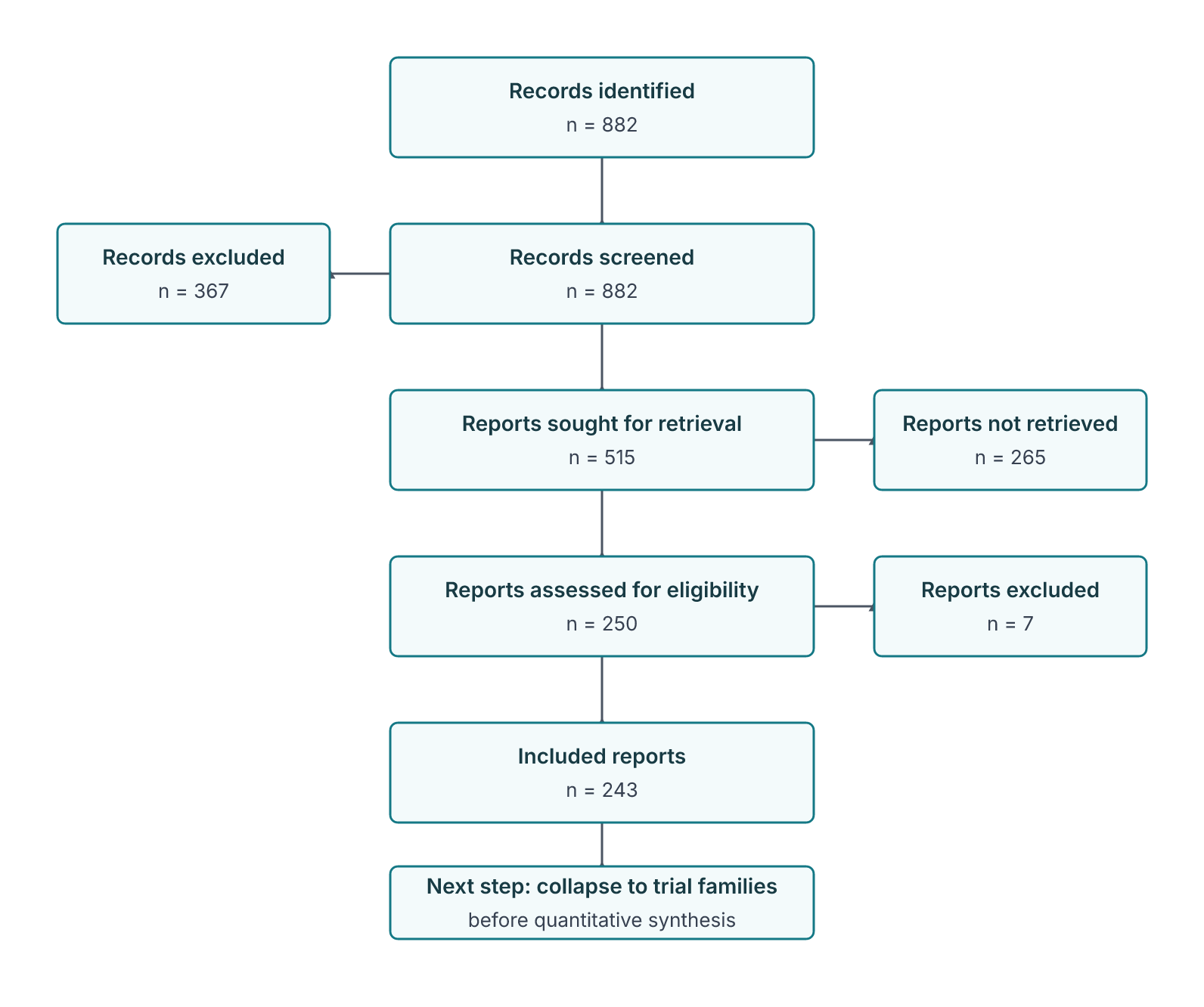
الشكل 1. مخطط التدفق للمراجعة المكتملة. ستحتفظ التحليلات بالتقارير الـ 265 التي لم يتم استرجاعها كفئة PRISMA مميزة بدلاً من اعتبارها غير مؤهلة.
المنهجية وهرم الأدلة
قامت المراجعة المكتملة بفحص 882 سجلاً، وسعت لاسترجاع 515 تقريراً، واحتفظت بـ 243 تقريراً بعد الفحص النصي الكامل. يبقي شكل PRISMA التقارير غير المسترجعة منفصلة عن استثناءات أهلية الدخول. قبل وضع اللمسات الأخيرة على النتائج الكمية، يجب دمج التقارير المتعددة من نفس الأصحاء الخاضعين للتجارب العشوائية في عائلة تجريبية واحدة؛ وعليه، فإن الجدول المكون من 50 صفاً أدناه يمثل خريطة أدلة على مستوى المادة، وليس تحليلاً تلوياً.[2]
التسلسل الهرمي هو: أدلة ذات صلة مباشرة بالجهاز العصبي الذاتي (المقاييس الخاضعة للتحكم مثل RMSSD، أو HF-HRV، أو PEP، أو RSA، أو قياسات العصب الحائر القلبي القابلة للمقارنة)؛ وتليها فيزيولوجيا الإجهاد غير المباشرة (الكورتيزول، ألفا-أميليز، GSR، الكاتيكولامينات)؛ ثم النتائج التي يبلغ عنها المرضى. لا يمكن لنقطة نهاية ذات مستوى أدنى تأسيس التنشيط نظير الودي. في تجربة اللوز، يتم تفسير قوة التردد العالي (HF) صراحة كمقياس لتعديل التنفس نظير الودي، بينما يمتلك التردد المنخفض/العالي (LF/HF) معنىً فسيولوجياً متنازعاً عليه.[1]
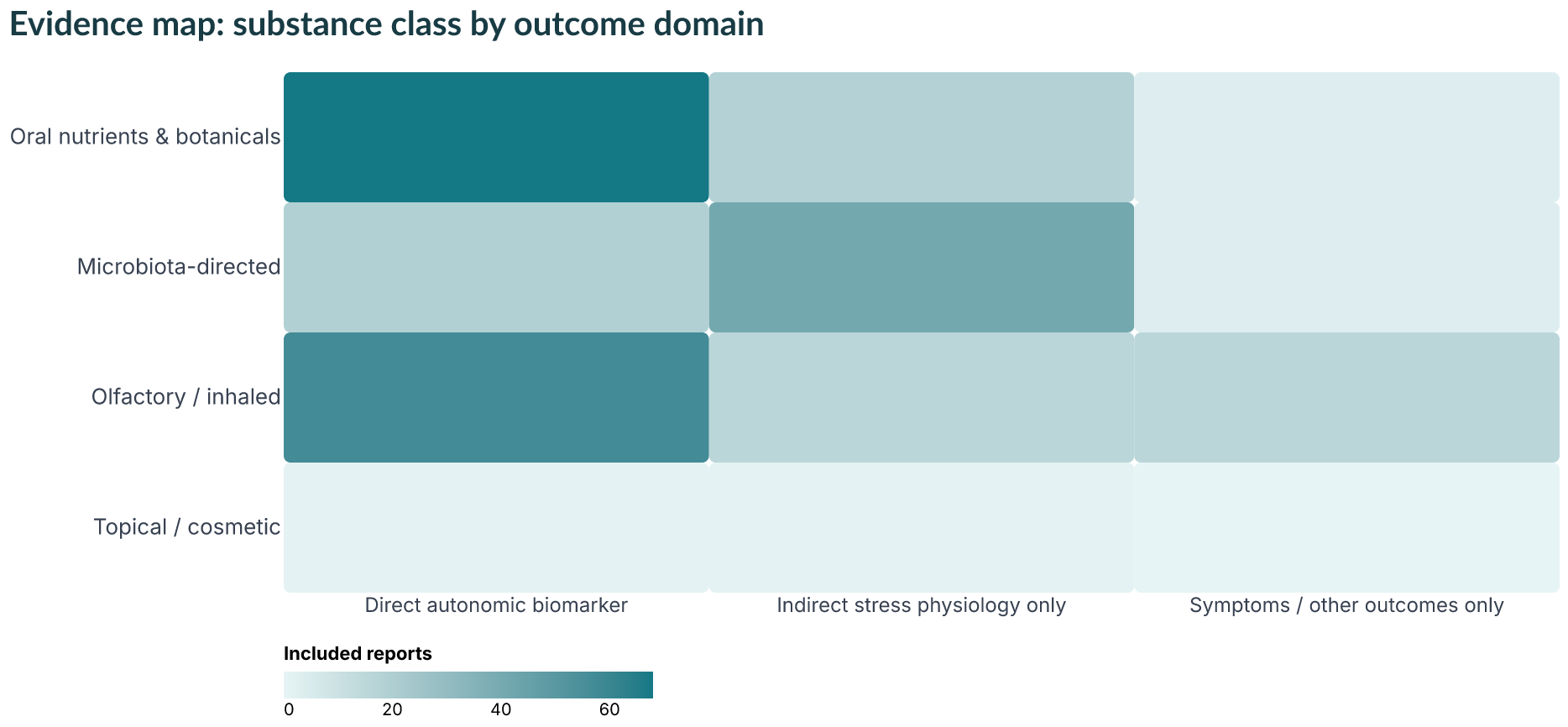
الشكل 2. خريطة على مستوى التقارير للمراجعة المكتملة. تم ترميز كل تقرير متضمن بناءً على مساره المستخلص وهوية المكون، وما إذا كان قد أبلغ عن مؤشر حيوي مستقل مباشر، أو فيزيولوجيا الإجهاد غير المباشرة فقط، أو الأعراض/النتائج الأخرى فقط. قيم الخلايا هي أعداد التقارير، وليست اتجاه التأثير، أو اليقين، أو أعداد التجارب المستقلة؛ وستسبق عملية إزالة التكرار على مستوى عائلة التجارب عملية التوليف الكمي.
الإطار الآلي المرشح
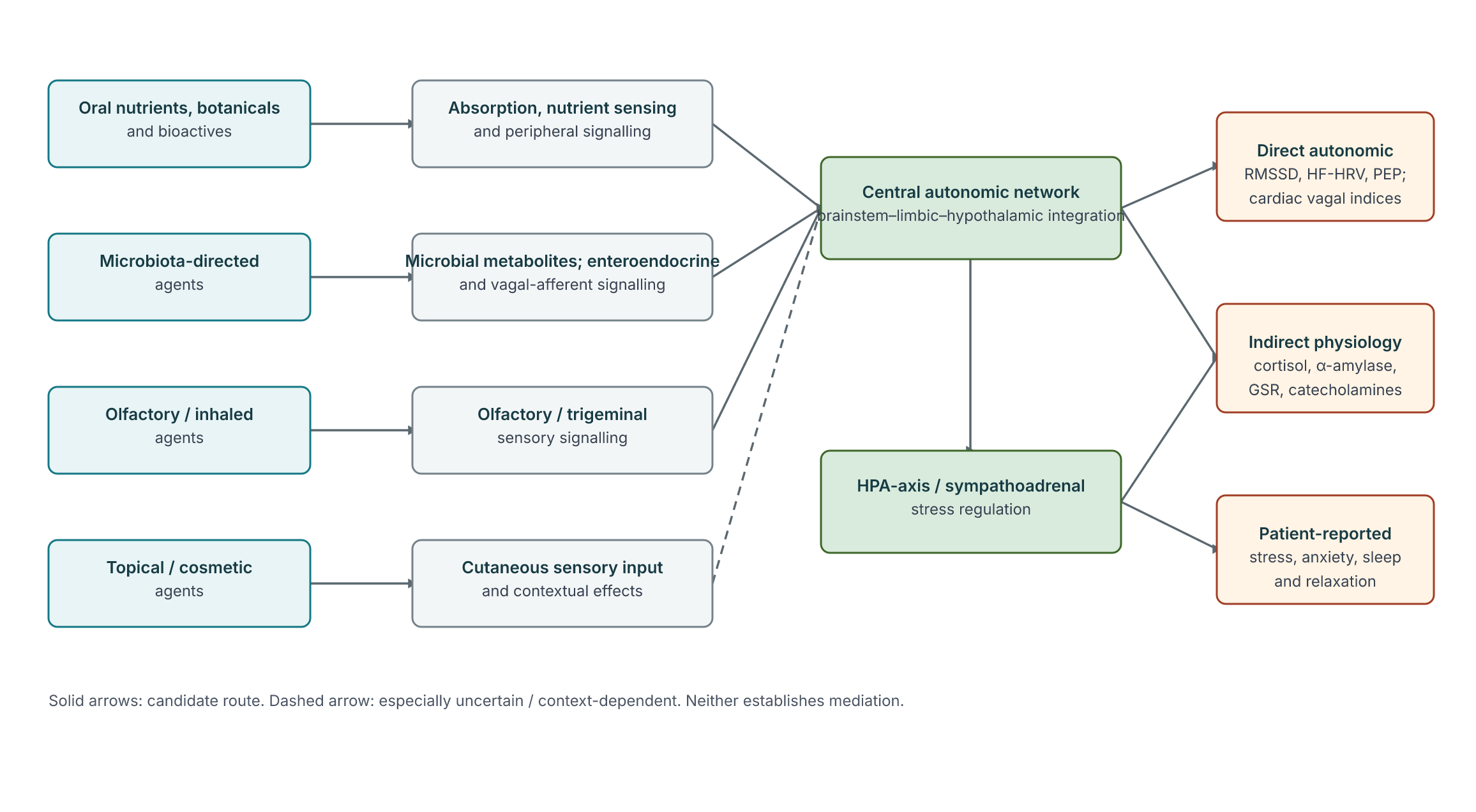
الشكل 3. الإطار المفاهيمي للمراجعة. تدل الأسهم على المسارات المرشحة ذات المعقولية البيولوجية، وليس الوساطة المُثبتة في التجارب المتضمنة. ستميز الورقة بين الأساس المنطقي الآلي والأدلة السريرية للتغيرات في المؤشرات الحيوية للاستقلاب الذاتي أو الإجهاد.
المخطط هو عمداً إطار للمسارات المرشحة. يمكن للتجارب الخاضعة للتحكم إثبات تغير المؤشرات الحيوية ولكن نادراً ما تثبت أن مساراً مقترحاً ششمياً، أو متعلقاً بعصب وارد، أو مناعياً-أيضياً، أو محوراً هرمونياً (HPA) هو ما توسط في ذلك. على سبيل المثال، يدرج باحثو اللوز العديد من التفسيرات المحتملة المتعلقة بالعناصر الغذائية، والأوعية الدموية، ومنعكس الضغط، وسكر الدم، والإجهاد بدلاً من تحديد آلية واحدة.[1]
خريطة الأدلة الرئيسية لـ 50 مادة
قاعدة التفسير: تعني كلمة "مباشر" أن تقريراً بشرياً واحداً على الأقل خاضعاً للتحكم قيّم مقياساً للجهاز العصبي الذاتي القلبي؛ وهي لا تعني الفعالية المُثبتة بالمثل. تعني كلمة "غير مباشر" أن الأدلة البشرية التي تمت مراجعتها كانت في الغالب عصبية صماوية، أو جلدية كهربائية، أو تخطيط أمواج الدماغ (EEG)، أو على مستوى الأعراض. "المسار المرشح" هو فرضية ميكانيكية، وليس وسيطاً مؤكداً. يجب التحقق من وضع الاتحاد الأوروبي مكوناً تلو مكون، ويجب عدم تحويله إلى ادعاء صحي ذاتي. تتبع قاعدة التصنيف هذه هرم الأدلة المطبق في هذه الورقة بدلاً من الجزم بالتصريح أو الفعالية. إن التمييز بين تفسير HF/RMSSD وتفسير LF/HF مستمد من مناقشة قياس تقلب معدل ضربات القلب (HRV) لتجربة اللوز المحكومة.[1]
| # | المادة / العامل المعياري | الفئة / المسار | المسار المرشح | أعلى مستوى للنتيجة | موقف الأدلة |
|---|---|---|---|---|---|
| 1 | أوميغا-3 (حمض إيكوسابنتانويك + حمض دوكوساهيكسانويك) | عنصر غذائي فموي | الفيزيولوجيا الكهربائية للأغشية؛ استجابة منعكس الضغط/القلب | مباشر | إشارة مباشرة خاصة بالسياق |
| 2 | اللوز الكامل | طعام فموي | فرضيات الأنماط الغذائية، والأوعية الدموية، ومنعكس الضغط | مباشر | توصل تقرير واحد لمهمة إجهاد محكومة إلى طاقة HF أعلى مقارنة بالتحكم؛ بينما لم تتأثر المؤشرات الأخرى.[1] |
| 3 | إل-ثيانين | حمض أميني فموي | ضبط الإجهاد الغلوتاماتي/المتوسط بالغابا | غير مباشر | غير مباشر / مختلط |
| 4 | حمض الغاما-أمينوبوتيريك (GABA) | حمض أميني فموي | إشارات الغابا المعوية والمحيطية | مباشر | أدلة مباشرة مبكرة |
| 5 | تورين | حمض أميني فموي | التنظيم التناضحي والضبط الذاتي | غير مباشر | غير مباشر / مختلط |
| 6 | غلايسين | حمض أميني فموي | النقل العصبي المثبط وفيزيولوجيا النوم | غير مباشر | غير مباشر / مختلط |
| 7 | مغنيسيوم | معدن فموي | القابلية للاستثارة وتوتر الأوعية الدموية | غير مباشر | غير مباشر / مختلط |
| 8 | فيتامين هـ | فيتامين فموي | آليات الإجهاد التأكسدي والأوعية الدموية | مباشر | أدلة مباشرة محدودة |
| 9 | فيتامين سي | فيتامين فموي | الاختزال والأكسدة وضبط إجهاد المحور الهرموني (HPA) | غير مباشر | غير مباشر / مختلط |
| 10 | النترات الغذائية / الشمندر | مركب حيوي غذائي فموي | أكسيد النيتريك ومسارات منعكس الضغط | مباشر | أدلة مباشرة مبكرة |
| 11 | عصير البطيخ | مركب حيوي غذائي فموي | إشارات السيترولين-NO | مباشر | أدلة مباشرة مبكرة |
| 12 | ألفا-لاكتالبومين / هيدروليزات التربتوفان | ببتيد فموي | مسار سلائف السيروتونين | مباشر | أدلة مباشرة مبكرة |
| 13 | لاكتوفيرين | ببتيد فموي | إشارات الأعصاب المناعية ومحور الإجهاد | غير مباشر | غير مباشر / مختلط |
| 14 | هيدروليزات ألفا-أس1-كازين (Lactium) | ببتيد فموي | ببتيد حيوي نشط / فرضية الغابا-A | غير مباشر | غير مباشر / مختلط |
| 15 | فوسفاتيديل سيرين + حمض الفوسفاتيديك | فوسفوليبيد فموي | تفاعل محور الغدة الكظرية وتحت المهاد (HPA) | غير مباشر | إشارة فيزيولوجيا الإجهاد غير المباشرة |
| 16 | مستخلص الأشواغاندا | نباتي فموي | فرضية محور (HPA) والتكيف مع الإجهاد | غير مباشر | غير مباشر / مختلط |
| 17 | الروديولا الوردية (Rhodiola rosea) | نباتي فموي | فرضية التكيف مع الإجهاد / أحادية الأمين | غير مباشر | غير مباشر / مختلط |
| 18 | الريحان المقدس | نباتي فموي | فرضية التكيف مع الإجهاد | غير مباشر | غير مباشر / مختلط |
| 19 | بلسم الليمون (الميلِّيسا) | نباتي فموي | الفرضية الغاباوية/الكولينية | غير مباشر | غير مباشر / مختلط |
| 20 | لحاء الماغنوليا | نباتي فموي | فرضية مستقبلات غابا-A ومحور (HPA) | غير مباشر | غير مباشر / مختلط |
| 21 | الزعفران | نباتي فموي | فرضية أحادية الأمين ومحور (HPA) | غير مباشر | غير مباشر / مختلط |
| 22 | مستخلص الماكي | بوليفينول فموي | فرضية الاختزال والأكسدة / البطانة | مباشر | أدلة مباشرة مبكرة |
| 23 | مستخلص الهليون المعالج بالإنزيم | نباتي فموي | فرضية محور الإجهاد | غير مباشر | غير مباشر / مختلط |
| 24 | الجينسنغ السيبيري (Acanthopanax senticosus) | نباتي فموي | فرضية التكيف مع الإجهاد والجهاز العصبي الذاتي القلبي | مباشر | أدلة مباشرة مبكرة |
| 25 | إل-كارنيتين | عنصر غذائي فموي | الاستقلاب الميتوكوندري والقلبي | مباشر | تم الإبلاغ عن إشارة مباشرة سلبية |
| 26 | لاكتوباسيلوس غاسيري CP2305 (معالج بالحرارة) | ما بعد حيوي (Postbiotic) | فرضية محور الأمعاء والدماغ / الغدد الصماء المعوية والعصب الحائر | مباشر | إشارة مباشرة حادة |
| 27 | لاكتوباسيلوس كاسيوي شيروتا | بروبيوتيك | مسار الميكروبيوتا-المناعة-محور (HPA) | غير مباشر | غير مباشر / مختلط |
| 28 | لاكتيبلانتيسباسيلوس بلانتاروم PS128 | بروبيوتيك | مسار الميكروبيوتا والعصبية الصماوية | غير مباشر | غير مباشر / مختلط |
| 29 | لاكتيبلانتيسباسيلوس بلانتاروم P8 | بروبيوتيك | مسار الميكروبيوتا ومحور الإجهاد | غير مباشر | غير مباشر / مختلط |
| 30 | بيفيدوبكتيريوم لونغوم 1714 | بروبيوتيك | مسار الأمعاء والدماغ وتفاعل الإجهاد | مباشر | أدلة مباشرة مبكرة |
| 31 | بيفيدوبكتيريوم لونغوم NCC3001 | بروبيوتيك | مسار الأمعاء والدماغ / المناعة | غير مباشر | غير مباشر / مختلط |
| 32 | لاكتوباسيلوس هيلفيتيكوس R0052 + بيفيدوبكتيريوم لونغوم R0175 | بروبيوتيك | مسار الميكروبيوتا ومحور (HPA) | غير مباشر | غير مباشر / مختلط |
| 33 | OMNi-BiOTiC STRESS Repair | بروبيوتيك متعدد السلالات | مسار الميكروبيوتا والجهاز العصبي الذاتي | مباشر | إشارة مباشرة محدودة السكان |
| 34 | سيساروميسيس بولاردي (Saccharomyces boulardii) CNCM I-1079 | خميرة البروبيوتيك | فيزيولوجيا الميكروبيوتا والإجهاد | غير مباشر | غير مباشر / مختلط |
| 35 | إينولين | بريبايوتيك | الأحماض الدهنية قصيرة السلسلة (SCFA) وإشارات الغدد الصماء المعوية | غير مباشر | غير مباشر / مختلط |
| 36 | غالاکتو-أوليغوسكاريد (GOS) | بريبايوتيك | الأحماض الدهنية قصيرة السلسلة (SCFA) ومسار الميكروبيوتا ومحور (HPA) | غير مباشر | غير مباشر / مختلط |
| 37 | زبدات الصوديوم (بوتيرات الصوديوم) | ما بعد حيوي / حمض دهني قصير السلسلة (SCFA) | مستقبلات الأحماض الدهنية الحرة (FFAR) وإشارات الغدد الصماء المعوية | غير مباشر | غير مباشر / مختلط |
| 38 | زيت البرغموت العطري | شَمّي | المسار الشمي-الحوفي-الذاتي | مباشر | مباشر ولكنه غير معمي حسياً |
| 39 | زيت الخزامى العطري | شَمّي / موضعي | المسار الشمي-الحوفي أو الحسي الجلدي | مباشر | صغير / يعتمد على السياق |
| 40 | لينالول | شَمّي | المسار الشمي-الحوفي | مباشر | أدلة مباشرة مبكرة |
| 41 | أسيتات الليناليل | شَمّي | المسار الشمي-الحوفي | غير مباشر | غير مباشر / مختلط |
| 42 | بيتا-كاريوفيلين | شَمّي | المسار الشمي الحسي وفرضية مستقبلات القنب (CB2) | مباشر | أدلة مباشرة مبكرة |
| 43 | سيترال | شَمّي | المسار الشمي الحسي | مباشر | أدلة مباشرة مبكرة |
| 44 | زيت البرتقال العطري | شَمّي | المسار الشمي-الحوفي | مباشر | أدلة مباشرة مبكرة |
| 45 | زيت اليوزو العطري | شَمّي | المسار الشمي-الحوفي | مباشر | أدلة مباشرة مبكرة |
| 46 | زيت النيرولي العطري | شَمّي | المسار الشمي-الحوفي | غير مباشر | غير مباشر / مختلط |
| 47 | زيت الإيلنغ العطري | شَمّي | المسار الشمي-الحوفي | غير مباشر | غير مباشر / مختلط |
| 48 | خشب الأرز / سيدرول | شَمّي | المسار الشمي الحسي | مباشر | أدلة مباشرة مبكرة |
| 49 | تربينات الفايتونسايد | شَمّي | المسار الشمي الحسي | مباشر | أدلة مباشرة مبكرة |
| 50 | زيت الورد العطري | شَمّي | المسار الشمي-الحوفي | غير مباشر | غير مباشر / مختلط |
تفسير مرجح بالأدلة
إن هذا الجدول ليس بقصد التعمد قائمة لتصنيف المنتجات. إن السؤال الأقوى لكل مرشح هو ما إذا كان التغير المقارن بالعلاج الوهمي أو الضابط في مؤشرات RMSSD أو HF-HRV أو RSA أو PEP يُعاد إنتاجه في مجتمع وسياق وثيلي الصلة بالاستخدام المقصود. إن الأدلة المباشرة التي تظهر في دراسة حسية صغيرة وحادة أو ضمن تركيبة متعدّدة المكونات يجب ألا تُنقل إلى ادعاء استقلابي على مستوى المستهلك. وإن الخطوة التالية للمخطوطة هي مراجعة شاملة لعائلة التجارب، تتبوها عملية استخراج لحجم التأثير فقط في الحالات التي توفر فيها التقارير الأساسية المتوسطات والتشتت والنقاط الزمنية والمقارنات المتوافقة. وإن الحاجة إلى إزالة التكرار من الأدلة على مستوى التقارير قبل إجراء التخليق الكمي تُعد واضحة صراحةً في مراجعة مسار المراجعة.[2]
الأشكال من المستند المصدر