Nötrasötik, mikrobiyota odaklı ve duyusal ajanlar yoluyla otonom stres modülasyonu
50 maddelik yolak haritasına sahip, PRISMA uyumlu kanıt sentezi
Bu kanıt tabanındaki hiçbir madde kanıtlanmış, genel amaçlı bir “parasempatik aktivatör” olarak tanımlanmamalıdır. Kalp atış hızı değişkenliği (HRV), kardiyak otonom regülasyonun dolaylı bir ölçümüdür.[1] İnceleme çerçevesi, kardiyak-vagal indeksleri, stres fizyolojisini ve semptom skorlarını ayrı sonuç kademeleri olarak sınıflandırır. Ulaşılan en net diyet RKÇ'sinde, bademler zihinsel stres görevi sırasında diğer HRV indekslerini değil, yüksek frekanslı (high-frequency) HRV'yi artırmıştır; bu durum, derlemenin sinyalleri genel bir vagal aktivasyon olarak değil, bağlama özgü olarak ele almasının nedenini göstermektedir.[1]
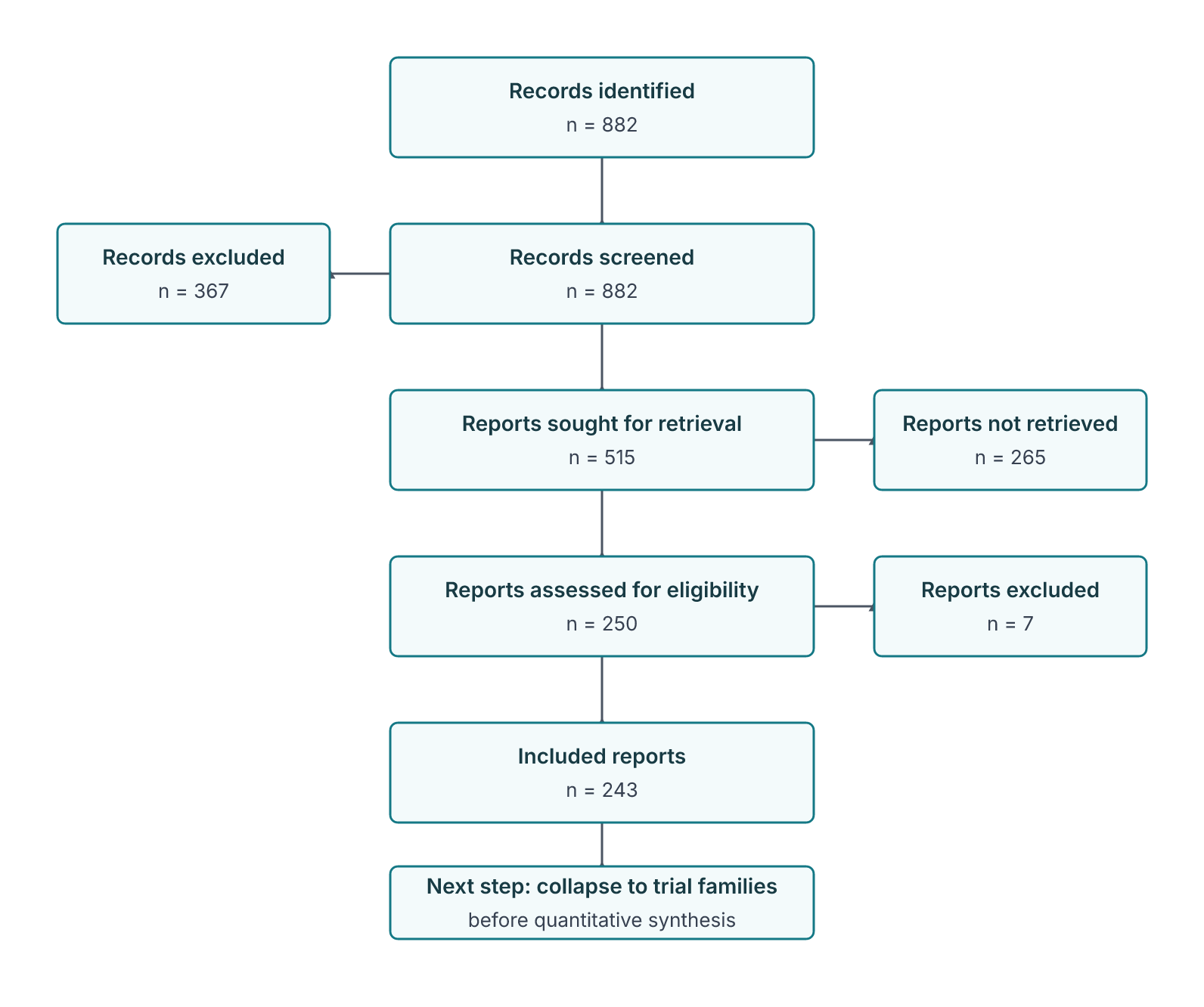
Şekil 1. Tamamlanan derleme için akış şeması. Analiz, erişilemeyen 265 raporu uygun değil olarak değerlendirmek yerine ayrı bir PRISMA kategorisi olarak tutacaktır.
Yöntemler ve kanıt hiyerarşisi
Tamamlanan derleme 882 kaydı taramış, alınması için 515 rapor talep etmiş ve tam metin taramasından sonra 243 raporu saklamıştır. PRISMA figürü, erişilememeyi uygunluk dışlamalarından ayrı tutmaktadır. Kantitatif sonuçlar kesinleştirilmeden önce, aynı randomize kohorttan alınan birden fazla rapor bir deneme ailesi altında birleştirilmelidir; bu nedenle aşağıdaki 50 satırlık tablo bir meta-analiz değil, madde düzeyinde bir kanıt haritasıdır.[2]
Hiyerarşi şöyledir: doğrudan otonom kanıtı (kontrollü RMSSD, HF-HRV, PEP, RSA veya benzeri kardiyak-vagal ölçümler); dolaylı stres fizyolojisi (kortizol, alfa-amilaz, GSR, katekolaminler); ve ardından hastalar tarafından bildirilen sonuçlar. Alt kademedeki bir son nokta parasempatik aktivasyon oluşturamaz. Badem çalışmasında, HF gücü açıkça bir parasempatik solunum-modülasyon ölçümü olarak yorumlanırken, LF/HF tartışmalı bir fizyolojik anlama sahiptir.[1]
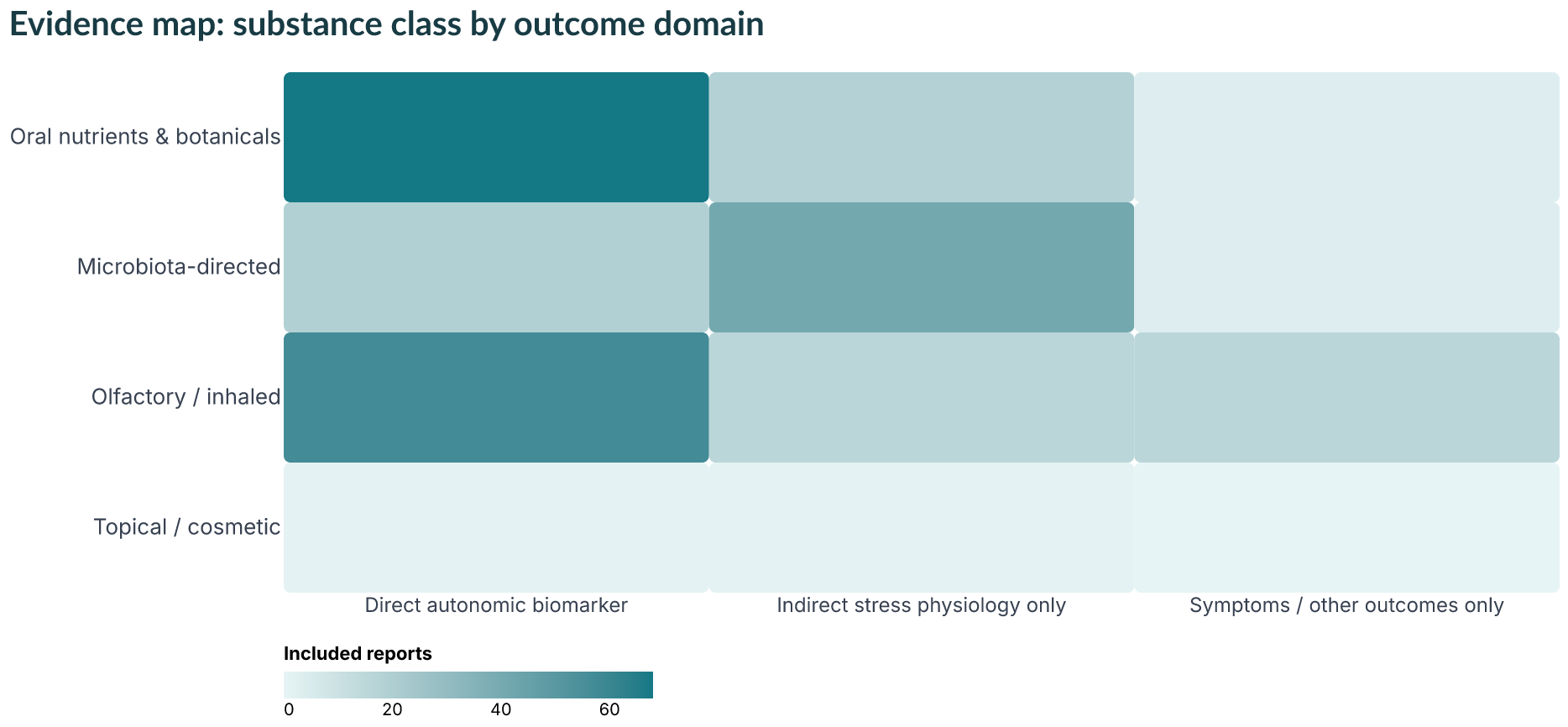
Şekil 2. Tamamlanan derlemenin rapor düzeyindeki haritası. Dahil edilen her rapor, çıkarılan yolu ve bileşen kimliğine göre ve doğrudan bir otonom biyobelirteç, yalnızca dolaylı stres fizyolojisi veya yalnızca semptomlar/diğer sonuçlar rapor edip etmediğine göre kodlanmıştır. Hücre değerleri etki yönü, kesinliği veya bağımsız deneme sayısı değil, rapor sayılarıdır; nicel sentezden önce deneme ailesi tekilleştirmesi yapılacaktır.
Aday mekanistik çerçeve
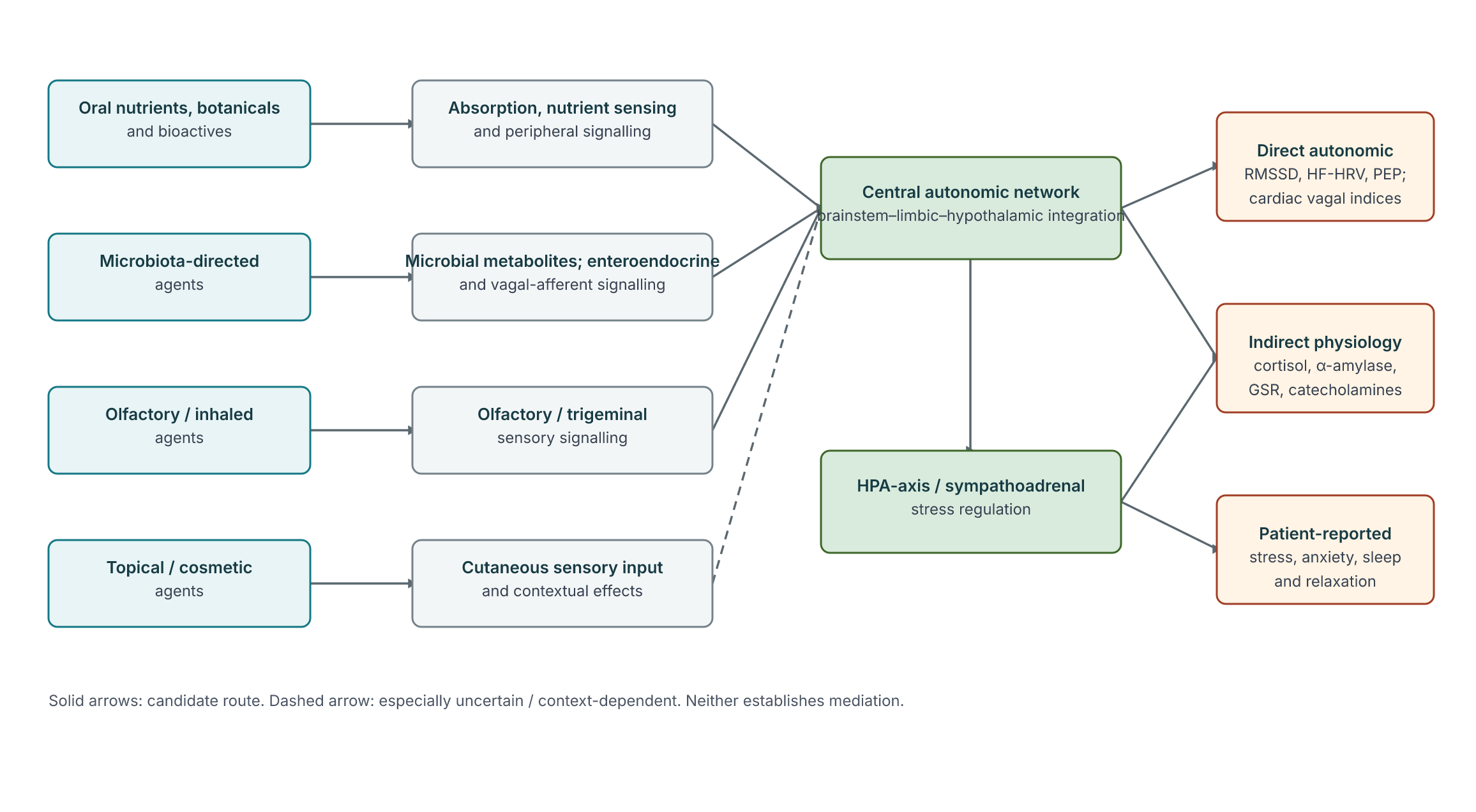
Şekil 3. Derleme için kavramsal çerçeve. Oklar, dahil edilen çalışmalarda gösterilen aracılığı değil, biyolojik olarak makul aday yolları belirtir. Makale, mekanistik gerekçeyi otonom veya stres biyobelirteçlerindeki değişikliklerin klinik kanıtlarından ayıracaktır.
Diyagram kasıtlı olarak bir aday yolak çerçevesidir. Kontrollü çalışmalar bir biyobelirteç değişimini gösterebilir ancak önerilen bir koku alma, vagal-afferent, immün-metabolik veya HPA aksı yolunun buna aracılık ettiğini nadiren kanıtlar. Örneğin, badem araştırmacıları tek bir mekanizma belirlemek yerine birkaç olası besin, vasküler, barorefleks, glisemik ve stresle ilgili açıklama listeler.[1]
Ana 50 maddelik kanıt haritası
Yorumlama kuralı: “Doğrudan”, en az bir kontrollü insan raporunun kardiyak-otonom bir ölçümü değerlendirdiği anlamına gelir; çoğaltılmış etkinlik anlamına gelmez. “Dolaylı”, incelenen insan kanıtlarının ağırlıklı olarak nöroendokrin, elektrodermal, EEG veya semptom düzeyinde olduğu anlamına gelir. “Aday yolak” onaylanmış bir aracı değil, mekanistik bir hipotezdir. AB statüsü bileşen bazında doğrulanmalı ve otonom sağlık iddiaya dönüştürülmemelidir. Bu sınıflandırma kuralı, yetkilendirme veya etkinlik iddia etmek yerine bu makalede uygulanan kanıt hiyerarşisini takip eder. HF/RMSSD ve LF/HF yorumu arasındaki ayrım, kontrollü badem çalışmasının HRV ölçüm tartışmasına dayanmaktadır.[1]
| # | Madde / standardize ajan | Sınıf / yol | Aday yolak | En yüksek sonuç kademesi | Kanıt duruşu |
|---|---|---|---|---|---|
| 1 | Omega-3 EPA+DHA | Oral besin | Membran elektrofizyolojisi; barorefleks/kardiyak duyarlılık | Doğrudan | Bağlama özgü doğrudan sinyal |
| 2 | Tam badem | Oral gıda | Besin modeli, vasküler ve barorefleks hipotezleri | Doğrudan | Kontrollü bir stres görevi raporu, kontrole kıyasla daha yüksek HF gücü buldu; diğer indeksler etkilenmedi.[1] |
| 3 | L-teanin | Oral amino asit | Glutamaterjik/GABAerjik stres modülasyonu | Dolaylı | Dolaylı / karışık |
| 4 | GABA | Oral amino asit | Enterik ve periferik GABA sinyallemesi | Doğrudan | Erken doğrudan kanıt |
| 5 | Taurin | Oral amino asit | Ozmoregülasyon ve otonom modülasyon | Dolaylı | Dolaylı / karışık |
| 6 | Glisin | Oral amino asit | İnhibitör nörotransmisyon ve uyku fizyolojisi | Dolaylı | Dolaylı / karışık |
| 7 | Magnezyum | Oral mineral | Uyarılabilirlik ve vasküler tonus | Dolaylı | Dolaylı / karışık |
| 8 | E Vitamini | Oral vitamin | Oksidatif stres ve vasküler mekanizmalar | Doğrudan | Sınırlı doğrudan kanıt |
| 9 | C Vitamini | Oral vitamin | Redoks ve HPA stresi modülasyonu | Dolaylı | Dolaylı / karışık |
| 10 | Diyet nitratı / pancar | Oral gıda biyoaktif bileşeni | Nitrik oksit ve barorefleks yolları | Doğrudan | Erken doğrudan kanıt |
| 11 | Karpuz suyu | Oral gıda biyoaktif bileşeni | Sitrülin-NO sinyallemesi | Doğrudan | Erken doğrudan kanıt |
| 12 | Alfa-laktalbümin / triptofan hidrolizatı | Oral peptid | Serotonerjik öncül yolu | Doğrudan | Erken doğrudan kanıt |
| 13 | Laktoferrin | Oral peptid | Nöroimmün ve stres ekseni sinyallemesi | Dolaylı | Dolaylı / karışık |
| 14 | Alfa-s1-kazein hidrolizatı (Lactium) | Oral peptid | Biyoaktif peptid / GABA-A hipotezi | Dolaylı | Dolaylı / karışık |
| 15 | Fosfatidilserin + fosfatidik asit | Oral fosfolipid | HPA aksı reaktivitesi | Dolaylı | Dolaylı stres fizyolojisi sinyali |
| 16 | Ashwagandha ekstresi | Oral bitkisel ürün | HPA aksı ve stres adaptasyonu hipotezi | Dolaylı | Dolaylı / karışık |
| 17 | Rhodiola rosea | Oral bitkisel ürün | Stres adaptasyonu / monoaminerjik hipotez | Dolaylı | Dolaylı / karışık |
| 18 | Kutsal fesleğen | Oral bitkisel ürün | Stres adaptasyonu hipotezi | Dolaylı | Dolaylı / karışık |
| 19 | Oğul otu | Oral bitkisel ürün | GABAerjik/kolinerjik hipotez | Dolaylı | Dolaylı / karışık |
| 20 | Manolya kabuğu | Oral bitkisel ürün | GABA-A ve HPA aksı hipotezi | Dolaylı | Dolaylı / karışık |
| 21 | Safran | Oral bitkisel ürün | Monoaminerjik ve HPA aksı hipotezi | Dolaylı | Dolaylı / karışık |
| 22 | Maqui ekstresi | Oral polifenol | Redoks / endotelyal hipotez | Doğrudan | Erken doğrudan kanıt |
| 23 | Enzimle işlenmiş kuşkonmaz ekstresi | Oral bitkisel ürün | Stres aksı hipotezi | Dolaylı | Dolaylı / karışık |
| 24 | Acanthopanax senticosus | Oral bitkisel ürün | Stres adaptasyonu ve kardiyak-otonom hipotezi | Doğrudan | Erken doğrudan kanıt |
| 25 | L-karnitin | Oral besin | Mitokondriyal ve kardiyak metabolizma | Doğrudan | Olumsuz doğrudan sinyal bildirildi |
| 26 | Lactobacillus gasseri CP2305 (ısı işlem görmüş) | Postbiyotik | Bağırsak-beyin / enteroendokrin-vagal hipotez | Doğrudan | Akut doğrudan sinyal |
| 27 | Lactobacillus casei Shirota | Probiyotik | Mikrobiyota-immün-HPA yolu | Dolaylı | Dolaylı / karışık |
| 28 | Lactiplantibacillus plantarum PS128 | Probiyotik | Mikrobiyota-nöroendokrin yol | Dolaylı | Dolaylı / karışık |
| 29 | Lactiplantibacillus plantarum P8 | Probiyotik | Mikrobiyota-stres aksı yolu | Dolaylı | Dolaylı / karışık |
| 30 | Bifidobacterium longum 1714 | Probiyotik | Bağırsak-beyin ve stres reaktivitesi yolu | Doğrudan | Erken doğrudan kanıt |
| 31 | Bifidobacterium longum NCC3001 | Probiyotik | Bağırsak-beyin / immün yol | Dolaylı | Dolaylı / karışık |
| 32 | Lactobacillus helveticus R0052 + B. longum R0175 | Probiyotik | Mikrobiyota-HPA yolu | Dolaylı | Dolaylı / karışık |
| 33 | OMNi-BiOTiC STRESS Repair | Çok suşlu probiyotik | Mikrobiyota-otonom yol | Doğrudan | Popülasyonla sınırlı doğrudan sinyal |
| 34 | Saccharomyces boulardii CNCM I-1079 | Probiyotik maya | Mikrobiyota-stres fizyolojisi | Dolaylı | Dolaylı / karışık |
| 35 | İnülin | Prebiyotik | KKFA (SCFA) ve enteroendokrin sinyallemesi | Dolaylı | Dolaylı / karışık |
| 36 | Galakto-oligosakkaritler (GOS) | Prebiyotik | KKFA (SCFA) ve mikrobiyota-HPA yolu | Dolaylı | Dolaylı / karışık |
| 37 | Sodyum bütirat | Postbiyotik / KKFA (SCFA) | FFAR ve enteroendokrin sinyallemesi | Dolaylı | Dolaylı / karışık |
| 38 | Bergamot uçucu yağı | Koku alma | Koku alma - limbik - otonom yol | Doğrudan | Doğrudan ancak duyusal olarak körlenmemiş |
| 39 | Lavanta uçucu yağı | Koku alma / topikal | Koku alma - limbik veya kutanöz duyusal yol | Doğrudan | Küçük / bağlama bağlı |
| 40 | Linalol | Koku alma | Koku alma - limbik yol | Doğrudan | Erken doğrudan kanıt |
| 41 | Linalil asetat | Koku alma | Koku alma - limbik yol | Dolaylı | Dolaylı / karışık |
| 42 | β-Karyofilen | Koku alma | Koku alma duyusal ve CB2 hipotezi | Doğrudan | Erken doğrudan kanıt |
| 43 | Sitral | Koku alma | Koku alma duyusal yolu | Doğrudan | Erken doğrudan kanıt |
| 44 | Portakal uçucu yağı | Koku alma | Koku alma - limbik yol | Doğrudan | Erken doğrudan kanıt |
| 45 | Yuzu uçucu yağı | Koku alma | Koku alma - limbik yol | Doğrudan | Erken doğrudan kanıt |
| 46 | Neroli uçucu yağı | Koku alma | Koku alma - limbik yol | Dolaylı | Dolaylı / karışık |
| 47 | Ylang-ylang uçucu yağı | Koku alma | Koku alma - limbik yol | Dolaylı | Dolaylı / karışık |
| 48 | Sedir ağacı / sedrol | Koku alma | Koku alma duyusal yolu | Doğrudan | Erken doğrudan kanıt |
| 49 | Fitontsit terpenleri | Koku alma | Koku alma duyusal yolu | Doğrudan | Erken doğrudan kanıt |
| 50 | Gül uçucu yağı | Koku alma | Koku alma - limbik yol | Dolaylı | Dolaylı / karışık |
Kanıt ağırlıklı yorumlama
Tablo bilinçli olarak bir ürün sıralama listesi değildir. Her bir aday için sorulacak en güçlü soru, RMSSD, HF-HRV, RSA veya PEP değerlerindeki plasebo veya kontrol karşılaştırmalı değişimin, amaçlanan kullanıma uygun bir popülasyonda ve bağlamda doğrulanıp doğrulanmadığıdır. Küçük, akut bir duyusal çalışmada veya çok içerikli bir formülasyonda yer alan doğrudan kanıtlar, tüketici düzeyinde bir otonomik iddiaya taşınmamalıdır. Bir sonraki makale aşaması bir deneme ailesi denetimidir; bunu, yalnızca temel raporların uyumlu ortalamalar, dağılımlar, zaman noktaları ve karşılaştırıcılar sağladığı durumlarda etki büyüklüğü ekstraksiyonu izler. Kantitatif sentez öncesinde rapor düzeyindeki kanıtların mükerrerliğinin giderilmesi gerekliliği, inceleme akışı denetiminde açıkça belirtilmiştir.[2]
Kaynak belgedeki figürler