Модуляция автономного стресса с помощью нутрицевтиков, агентов, воздействующих на микробиоту, и сенсорных агентов
Синтез доказательных данных в соответствии со стандартом PRISMA с картой путей для 50 субстанций
Ни одно вещество в этой доказательной базе не должно описываться как доказанный универсальный «парасимпатический активатор». Вариабельность сердечного ритма (ВСР) является косвенным показателем сердечной автономной регуляции.[1] В рамках обзорного подхода показатели сердечно-вагусной активности, физиология стресса и баллы симптомов классифицируются как отдельные уровни исходов. В наиболее четком из обнаруженных рандомизированных контролируемых исследований (РКИ) употребление миндаля приводило к увеличению высокочастотной составляющей ВСР во время выполнения задачи на умственный стресс, но не влияло на другие показатели ВСР, что иллюстрирует причину, по которой в обзоре сигналы рассматриваются как контекстно-зависимые, а не как глобальная вагусная активация.[1]
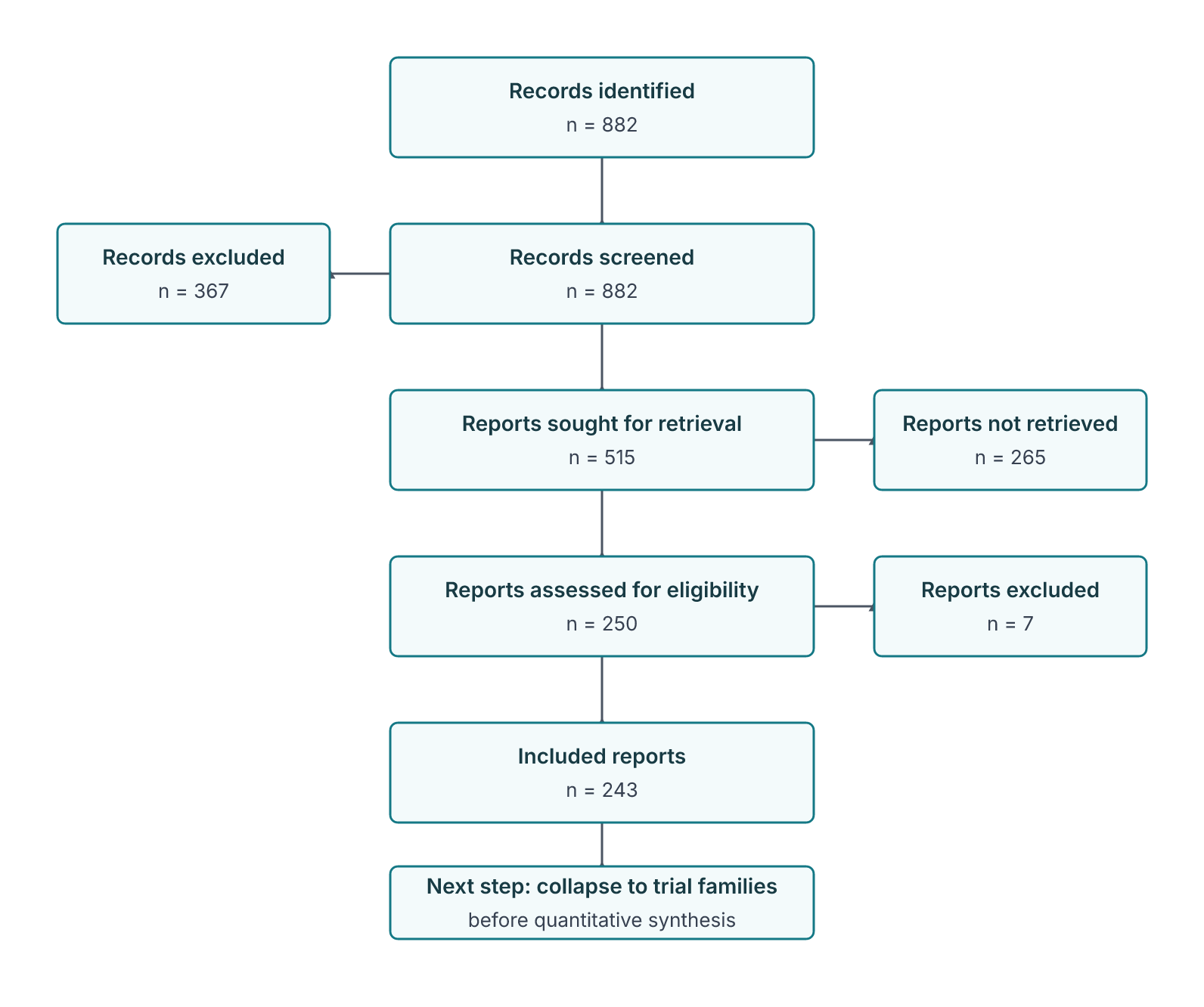
Рисунок 1. Блок-схема проведенного обзора. В ходе анализа ненайденные 275 отчетов будут сохранены в качестве отдельной категории PRISMA, а не отнесены к числу неприемлемых.
Методология и иерархия доказательств
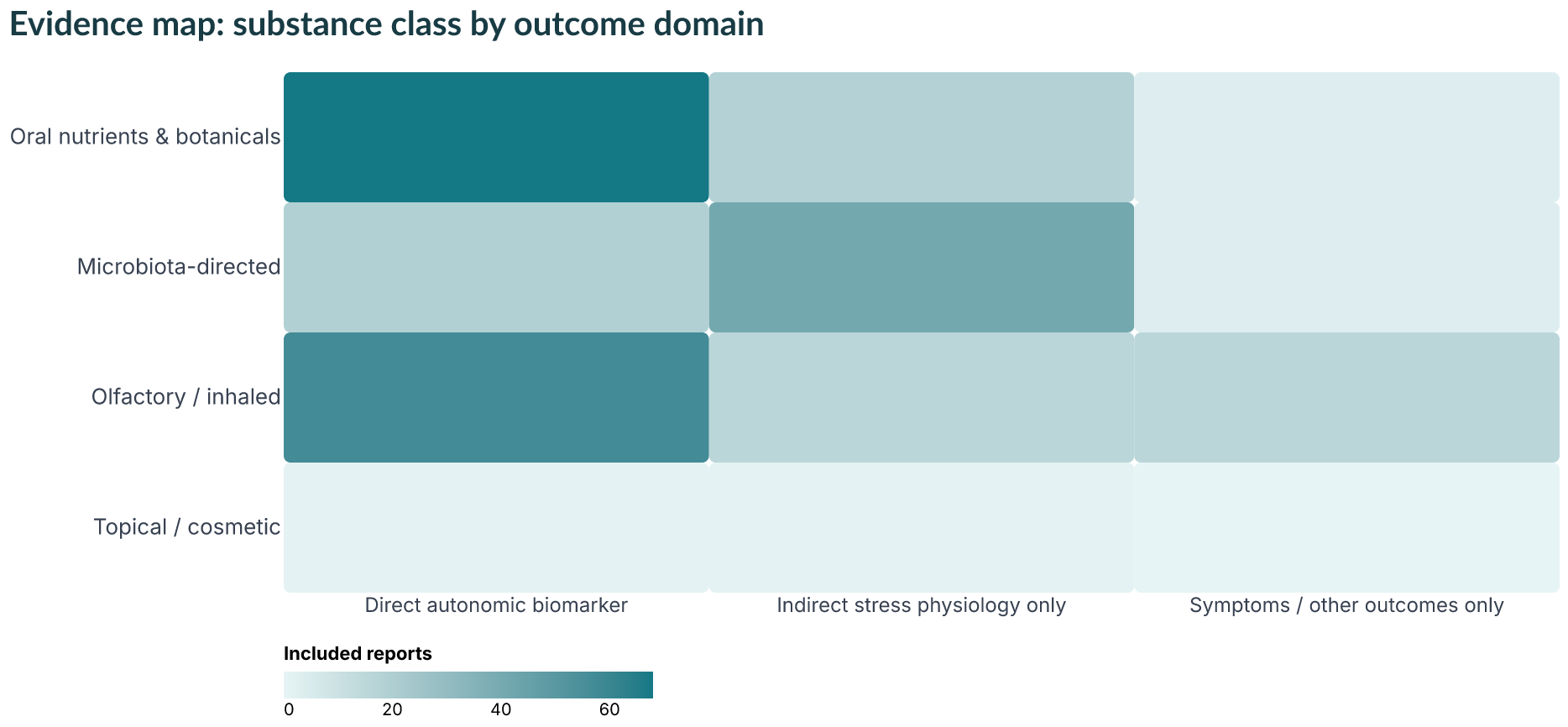
В рамках проведенного обзора было проанализировано 882 записи, запрошено 515 отчетов для извлечения и отобрано 243 отчета после скрининга полнотекстовых документов. На схеме PRISMA неполученные данные отделены от исключений по критериям соответствия. Перед фиксацией количественных выводов множественные отчеты из одной рандомизированной когорты должны быть объединены в семейство испытаний; следовательно, таблица из 50 строк ниже представляет собой карту доказательств на уровне субстанций, а не метаанализ.[2]
Иерархия выглядит следующим образом: прямые вегетативные данные (контролируемые показатели RMSSD, HF-HRV, PEP, RSA или сопоставимые сердечно-вагусные показатели); косвенная физиология стресса (кортизол, альфа-амилаза, кожно-гальваническая реакция, катехоламины); затем исходы, сообщаемые пациентами. Конечная точка более низкого уровня не может служить доказательством парасимпатической активации. В исследовании миндаля мощность высокочастотной составляющей (HF) явно интерпретируется как показатель парасимпатической респираторной модуляции, в то время как соотношение LF/HF имеет спорное физиологическое значение.[1]
Рисунок 2. Карта отчетов проведенного обзора на уровне отчетов. Каждый включенный отчет был закодирован на основе извлеченного пути и идентичности ингредиента, а также в зависимости от того, сообщал ли он о прямом вегетативном биомаркере, только о косвенной физиологии стресса или только о симптомах/других исходах. Значения ячеек представляют собой количество отчетов, а не направление эффекта, достоверность или количество независимых испытаний; дедупликация семейств испытаний будет предшествовать количественному синтезу.
Концептуальная база механизма
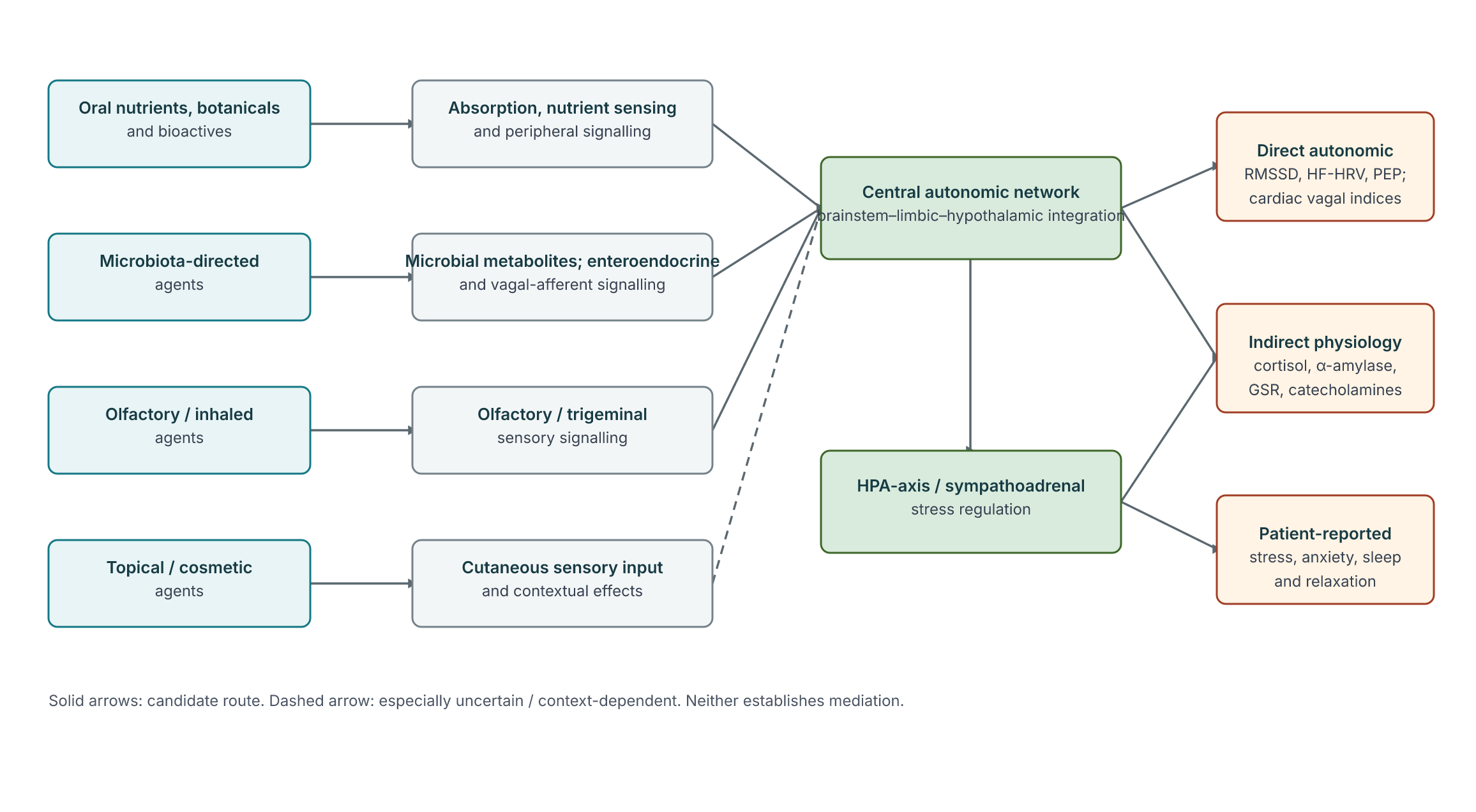
Рисунок 3. Концептуальная основа обзора. Стрелками обозначены биологически правдоподобные предполагаемые пути, а не доказанное посредничество в включенных исследованиях. В статье будет проведено различие между механистическим обоснованием и клиническими доказательствами изменений вегетативных биомаркеров или биомаркеров стресса.
Диаграмма намеренно представляет собой основу для предполагаемых путей. Контролируемые испытания могут продемонстрировать изменение биомаркера, но редко устанавливают, что его опосредовал предполагаемый обонятельный, вагусно-афферентный, иммунно-метаболический путь или путь гипоталамо-гипофизарно-надпочечниковой оси. Например, исследователи миндаля перечисляют несколько возможных питательных, сосудистых, барорефлекторных, гликемических и связанных со стрессом объяснений, вместо того чтобы выделить один механизм.[1]
Основная карта доказательств для 50 субстанций
Правило интерпретации: Термин «прямой» означает, что по меньшей мере одно контролируемое исследование с участием людей оценивало показатель сердечно-вегетативной деятельности; это не означает воспроизведенную эффективность. Термин «косвенный» означает, что рассмотренные данные клинических исследований носили преимущественно нейроэндокринный, электродермальный, электроэнцефалографический (ЭЭГ) характер или уровень симптомов. «Предполагаемый путь» — это механистическая гипотеза, а не подтвержденный медиатор. Статус в ЕС должен проверяться для каждого ингредиента в отдельности и не должен конвертироваться в заявления в отношении вегетативного здоровья. Это правило классификации следует иерархии доказательств, применяемой в данной статье, а не утверждает авторизацию или эффективность. Различие между интерпретацией HF/RMSSD и LF/HF обосновано обсуждением измерений ВСР в контролируемом исследовании миндаля.[1]
| # | Субстанция / стандартизированный агент | Класс / путь введения | Предполагаемый путь | Наивысший уровень исходов | Доказательная база |
|---|---|---|---|---|---|
| 1 | Омега-3 ЭПК+ДГК | Пероральный нутриент | Мембранная электрофизиология; барорефлекторная / сердечная реактивность | Прямой | Контекстно-зависимый прямой сигнал |
| 2 | Цельный миндаль | Пероральный пищевой продукт | Гипотезы питательного профиля, сосудистых и барорефлекторных механизмов | Прямой | В одном контролируемом исследовании стрессовой нагрузки зафиксирована более высокая мощность HF по сравнению с контролем; другие показатели не изменились.[1] |
| 3 | L-теанин | Пероральная аминокислота | Глутаматергическая / ГАМК-эргическая модуляция стресса | Косвенный | Косвенный / смешанный |
| 4 | ГАМК | Пероральная аминокислота | Энтеральная и периферическая сигнализация ГАМК | Прямой | Ранние прямые доказательства |
| 5 | Таурин | Пероральная аминокислота | Осморегуляция и вегетативная модуляция | Косвенный | Косвенный / смешанный |
| 6 | Глицин | Пероральная аминокислота | Тормозная нейропередача и физиология сна | Косвенный | Косвенный / смешанный |
| 7 | Магний | Пероральный минерал | Возбудимость и сосудистый тонус | Косвенный | Косвенный / смешанный |
| 8 | Витамин E | Пероральный витамин | Окислительный стресс и сосудистые механизмы | Прямой | Ограниченные прямые доказательства |
| 9 | Витамин C | Пероральный витамин | Редокс-модуляция и модуляция стресса HPA-оси | Косвенный | Косвенный / смешанный |
| 10 | Пищевые нитраты / свекла | Пероральный биоактивный компонент пищи | Пути оксида азота и барорефлекса | Прямой | Ранние прямые доказательства |
| 11 | Сок арбуза | Пероральный биоактивный компонент пищи | Цитруллин-NO-сигнализация | Прямой | Ранние прямые доказательства |
| 12 | Альфа-лактальбумин / гидролизат триптофана | Пероральный пептид | Путь предшественников серотонина | Прямой | Ранние прямые доказательства |
| 13 | Лактоферрин | Пероральный пептид | Нейроиммунная сигнализация и сигнализация оси стресса | Косвенный | Косвенный / смешанный |
| 14 | Гидролизат альфа-s1-казеина (Lactium) | Пероральный пептид | Биоактивный пептид / гипотеза ГАМК-А рецепторов | Косвенный | Косвенный / смешанный |
| 15 | Фосфатидилсерин + фосфатидная кислота | Пероральный фосфолипид | Реактивность оси HPA | Косвенный | Косвенный сигнал физиологии стресса |
| 16 | Экстракт ашваганды | Пероральный растительный компонент | Гипотеза HPA-оси и адаптации к стрессу | Косвенный | Косвенный / смешанный |
| 17 | Родиола розовая | Пероральный растительный компонент | Адаптация к стрессу / моноаминергическая гипотеза | Косвенный | Косвенный / смешанный |
| 18 | Тулси (священный базилик) | Пероральный растительный компонент | Гипотеза адаптации к стрессу | Косвенный | Косвенный / смешанный |
| 19 | Мелисса лекарственная | Пероральный растительный компонент | ГАМК-эргическая / холинергическая гипотеза | Косвенный | Косвенный / смешанный |
| 20 | Кора магнолии | Пероральный растительный компонент | Гипотеза ГАМК-А рецепторов и HPA-оси | Косвенный | Косвенный / смешанный |
| 21 | Шафран | Пероральный растительный компонент | Моноаминергическая гипотеза и гипотеза HPA-оси | Косвенный | Косвенный / смешанный |
| 22 | Экстракт маки | Пероральный полифенол | Редокс- / эндотелиальная гипотеза | Прямой | Ранние прямые доказательства |
| 23 | Экстракт спаржи, обработанный ферментами | Пероральный растительный компонент | Гипотеза стрессовой оси | Косвенный | Косвенный / смешанный |
| 24 | Acanthopanax senticosus (элеутерококк колючий) | Пероральный растительный компонент | Гипотеза адаптации к стрессу и сердечно-вегетативная гипотеза | Прямой | Ранние прямые доказательства |
| 25 | L-карнитин | Пероральный нутриент | Митохондриальный и сердечный метаболизм | Прямой | Сообщается об неблагоприятном прямом сигнале |
| 26 | Lactobacillus gasseri CP2305 (термически обработанные) | Постбиотик | Ось «кишечник — мозг» / энтероэндокринно-вагусная гипотеза | Прямой | Острый прямой сигнал |
| 27 | Lactobacillus casei Shirota | Пробиотик | Путь «микробиота — иммунитет — HPA-ось» | Косвенный | Косвенный / смешанный |
| 28 | Lactiplantibacillus plantarum PS128 | Пробиотик | Нейроэндокринный путь «микробиота — мозг» | Косвенный | Косвенный / смешанный |
| 29 | Lactiplantibacillus plantarum P8 | Пробиотик | Путь «микробиота — ось стресса» | Косвенный | Косвенный / смешанный |
| 30 | Bifidobacterium longum 1714 | Пробиотик | Путь «кишечник — мозг» и реактивность на стресс | Прямой | Ранние прямые доказательства |
| 31 | Bifidobacterium longum NCC3001 | Пробиотик | Путь «кишечник — мозг» / иммунный путь | Косвенный | Косвенный / смешанный |
| 32 | Lactobacillus helveticus R0052 + B. longum R0175 | Пробиотик | Путь «микробиота — HPA-ось» | Косвенный | Косвенный / смешанный |
| 33 | OMNi-BiOTiC STRESS Repair | Мультиштаммовый пробиотик | Путь «микробиота — автономная нервная система» | Прямой | Прямой сигнал с ограничениями по популяции |
| 34 | Saccharomyces boulardii CNCM I-1079 | Пробиотические дрожжи | Микробиота и физиология стресса | Косвенный | Косвенный / смешанный |
| 35 | Инулин | Пребиотик | Сигнализация короткоцепочечных жирных кислот (SCFA) и энтероэндокринная сигнализация | Косвенный | Косвенный / смешанный |
| 36 | Галактоолигосахариды (GOS) | Пребиотик | Сигнализация короткоцепочечных жирных кислот (SCFA) и путь «микробиота — HPA-ось» | Косвенный | Косвенный / смешанный |
| 37 | Бутират натрия | Постбиотик / короткоцепочечная жирная кислота (SCFA) | Свободные жирные кислоты (FFAR) и энтероэндокринная сигнализация | Косвенный | Косвенный / смешанный |
| 38 | Эфирное масло бергамота | Обонятельный путь | Обонятельно-лимбико-вегетативный путь | Прямой | Прямой, но сенсорно не ослепленный |
| 39 | Эфирное масло лаванды | Обонятельный / местный путь | Обонятельно-лимбический путь или кожный сенсорный путь | Прямой | Небольшой / контекстно-зависимый |
| 40 | Линалоол | Обонятельный путь | Обонятельно-лимбический путь | Прямой | Ранние прямые доказательства |
| 41 | Линалилацетат | Обонятельный путь | Обонятельно-лимбический путь | Косвенный | Косвенный / смешанный |
| 42 | бета-кариофиллен | Обонятельный путь | Обонятельная сенсорная гипотеза и гипотеза CB2-рецепторов | Прямой | Ранние прямые доказательства |
| 43 | Цитраль | Обонятельный путь | Обонятельный сенсорный путь | Прямой | Ранние прямые доказательства |
| 44 | Эфирное масло апельсина | Обонятельный путь | Обонятельно-лимбический путь | Прямой | Ранние прямые доказательства |
| 45 | Эфирное масло юдзу | Обонятельный путь | Обонятельно-лимбический путь | Прямой | Ранние прямые доказательства |
| 46 | Эфирное масло нероли | Обонятельный путь | Обонятельно-лимбический путь | Косвенный | Косвенный / смешанный |
| 47 | Эфирное масло иланг-иланга | Обонятельный путь | Обонятельно-лимбический путь | Косвенный | Косвенный / смешанный |
| 48 | Кедровое дерево / цедрол | Обонятельный путь | Обонятельный сенсорный путь | Прямой | Ранние прямые доказательства |
| 49 | Терпены фитонцидов | Обонятельный путь | Обонятельный сенсорный путь | Прямой | Ранние прямые доказательства |
| 50 | Эфирное масло розы | Обонятельный путь | Обонятельно-лимбический путь | Косвенный | Косвенный / смешанный |
Интерпретация с учетом веса доказательств
Таблица намеренно не является списком ранжирования продуктов. Наиболее весомым вопросом для каждого кандидата является то, воспроизводится ли сравнительное изменение RMSSD, HF-HRV, RSA или PEP по сравнению с плацебо или контролем в популяции и контексте, соответствующих предполагаемому применению. Прямые доказательства, полученные в одном небольшом остром сенсорном исследовании или в многокомпонентной рецептуре, не должны переноситься на заявления потребительского уровня в отношении вегетативной нервной системы. Следующим этапом работы с рукописью является аудит семейства испытаний с последующим извлечением величины эффекта только в тех случаях, когда исходные отчеты предоставляют сопоставимые средние значения, показатели дисперсии, временные точки и компараторы. Необходимость дедупликации доказательств на уровне отчетов перед количественным синтезом явно прописана в аудите процесса обзора.[2]
Рисунки из исходного документа