Autonomní modulace stresu pomocí nutraceutických, mikrobiomem řízených a senzorických látek
Syntéza důkazů zarovnaná s metodikou PRISMA s mapou drah pro 50 látek
Žádná látka v této databázi důkazů by neměla být označována za prokázaný, univerzální „parasympatický aktivátor“. HRV je nepřímým ukazatelem srdeční autonomní regulace.[1] Rámec přehledu označuje srdečně-vagové indexy, fyziologii stresu a skóre symptomů jako samostatné úrovně výsledků. V nejprůkaznější nalezené intervenční studii (RCT) s potravinami mandle zvýšily vysokofrekvenční HRV během duševního zátěžového testu, nikoliv však jiné indexy HRV, což ilustruje, proč přehled považuje signály za specifické pro daný kontext, a nikoliv za globální vagovou aktivaci.[1]
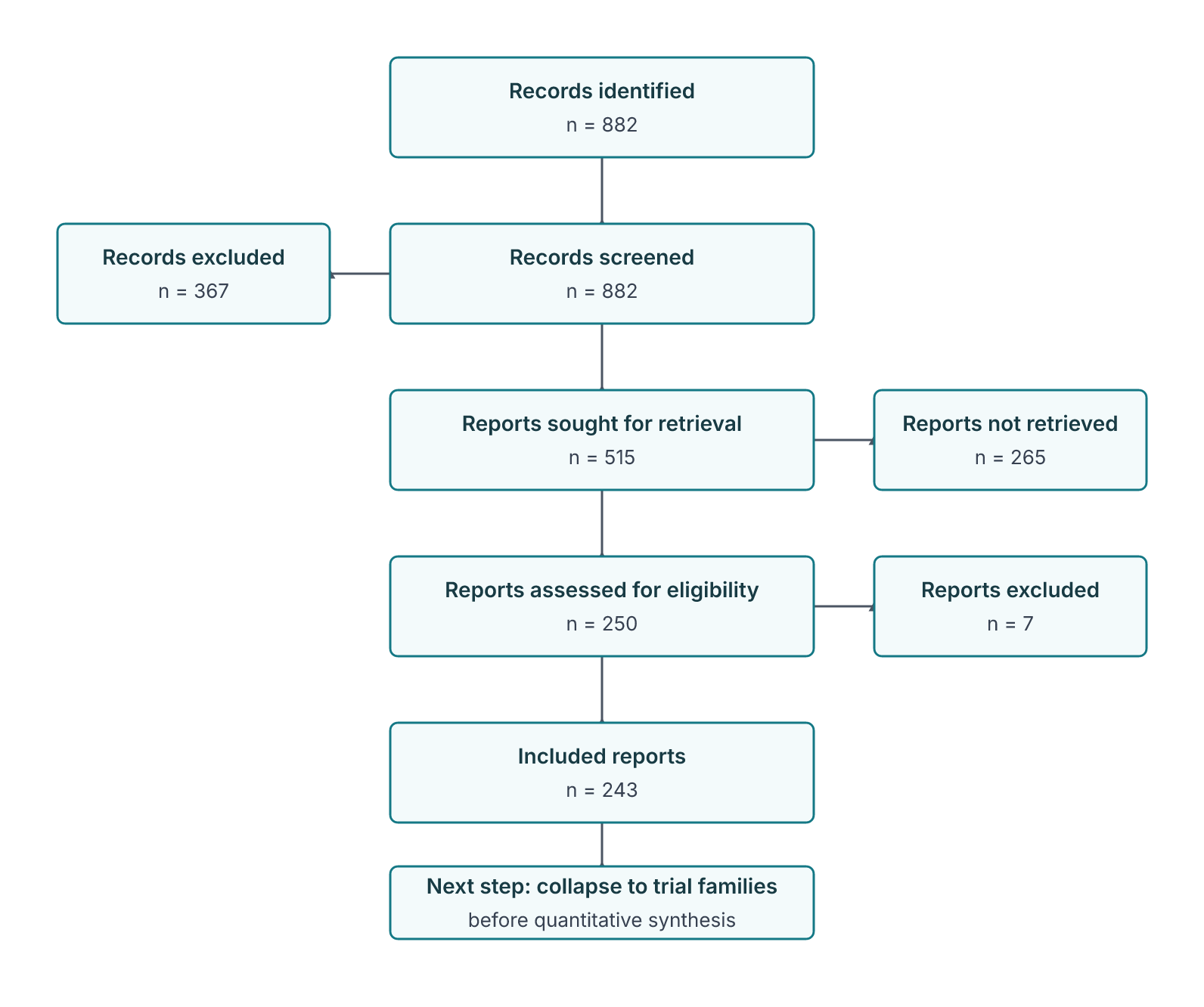
Obrázek 1. Vývojový diagram dokončeného přehledu. Analýza zachová 265 zpráv, které nebyly získány, jako samostatnou kategorii PRISMA namísto toho, aby je považovala za nezpůsobilé.
Metody a hierarchie důkazů
Dokončený přehled prověřil 882 záznamů, vyžádal si 515 zpráv k získání a ponechal si 243 zpráv po prověření plného textu. Diagram PRISMA odděluje nezískané záznamy od vyloučení na základě způsobilosti. Před finalizací kvantitativních závěrů je nutné sloučit více zpráv z téže randomizované kohorty do rodiny studií; tabulka o 50 řádcích níže je tedy mapou důkazů na úrovni látek, nikoliv metaanalýzou.[2]
Hierarchie je následující: přímé autonomní důkazy (kontrolované RMSSD, HF-HRV, PEP, RSA nebo srovnatelná srdečně-vagová měření); nepřímá fyziologie stresu (kortizol, alfa-amyláza, GSR, katecholaminy); a následně výsledky hlášené pacienty. Ukončení nižší úrovně nemůže prokázat parasympatickou aktivaci. Ve studii s mandlemi je výkon HF výslovně interpretován jako míra parasympatické respirační modulace, zatímco LF/HF má sporný fyziologický význam.[1]
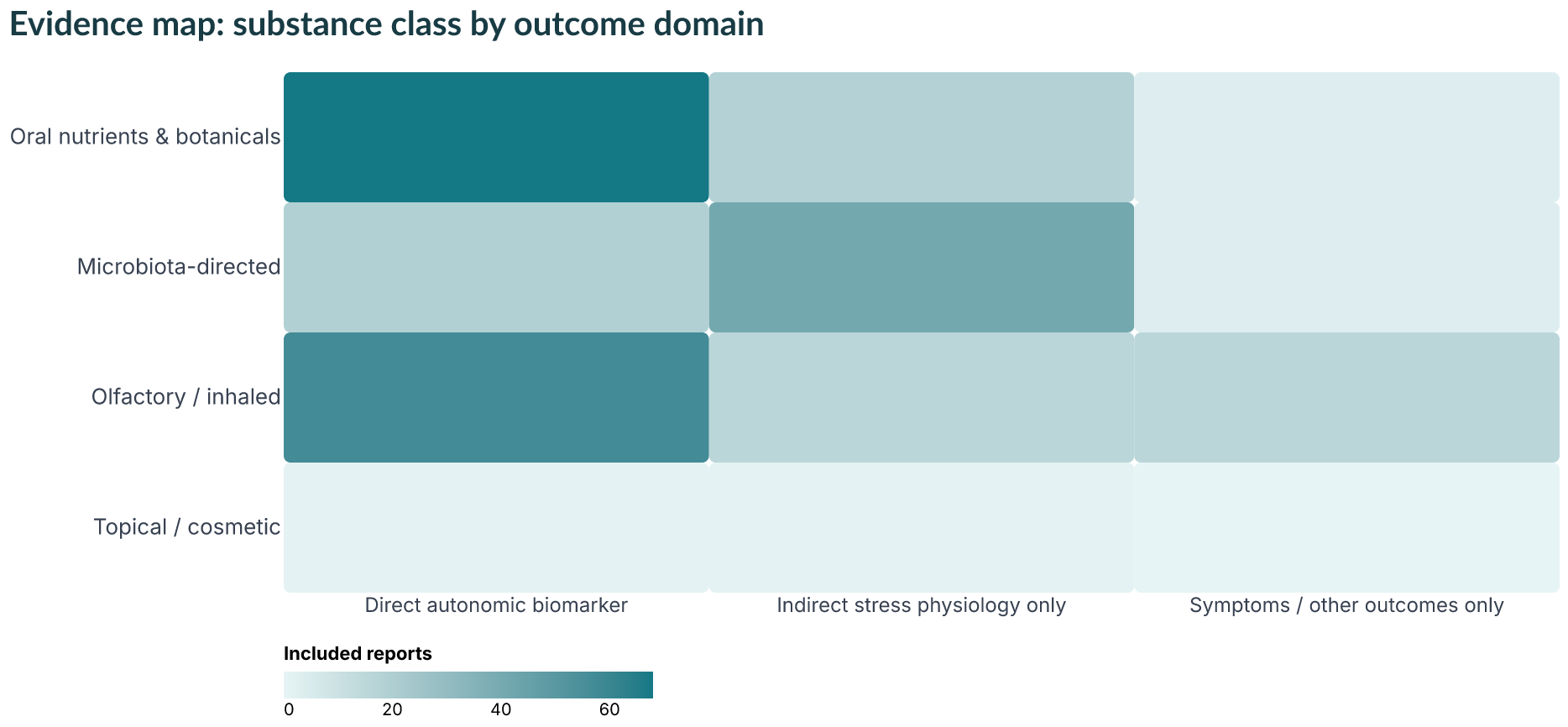
Obrázek 2. Mapa dokončeného přehledu na úrovni zpráv. Každá zahrnutá zpráva byla kódována podle své extrahované cesty a identity složky a podle toho, zda uváděla přímý autonomní biomarker, pouze nepřímou fyziologii stresu, nebo pouze příznaky/jiné výsledky. Hodnoty buněk jsou počty zpráv, nikoli směr účinku, jistota nebo počty nezávislých studií; deduplikace rodiny studií bude předcházet kvantitativní syntéze.
Kandidátský mechanistický rámec
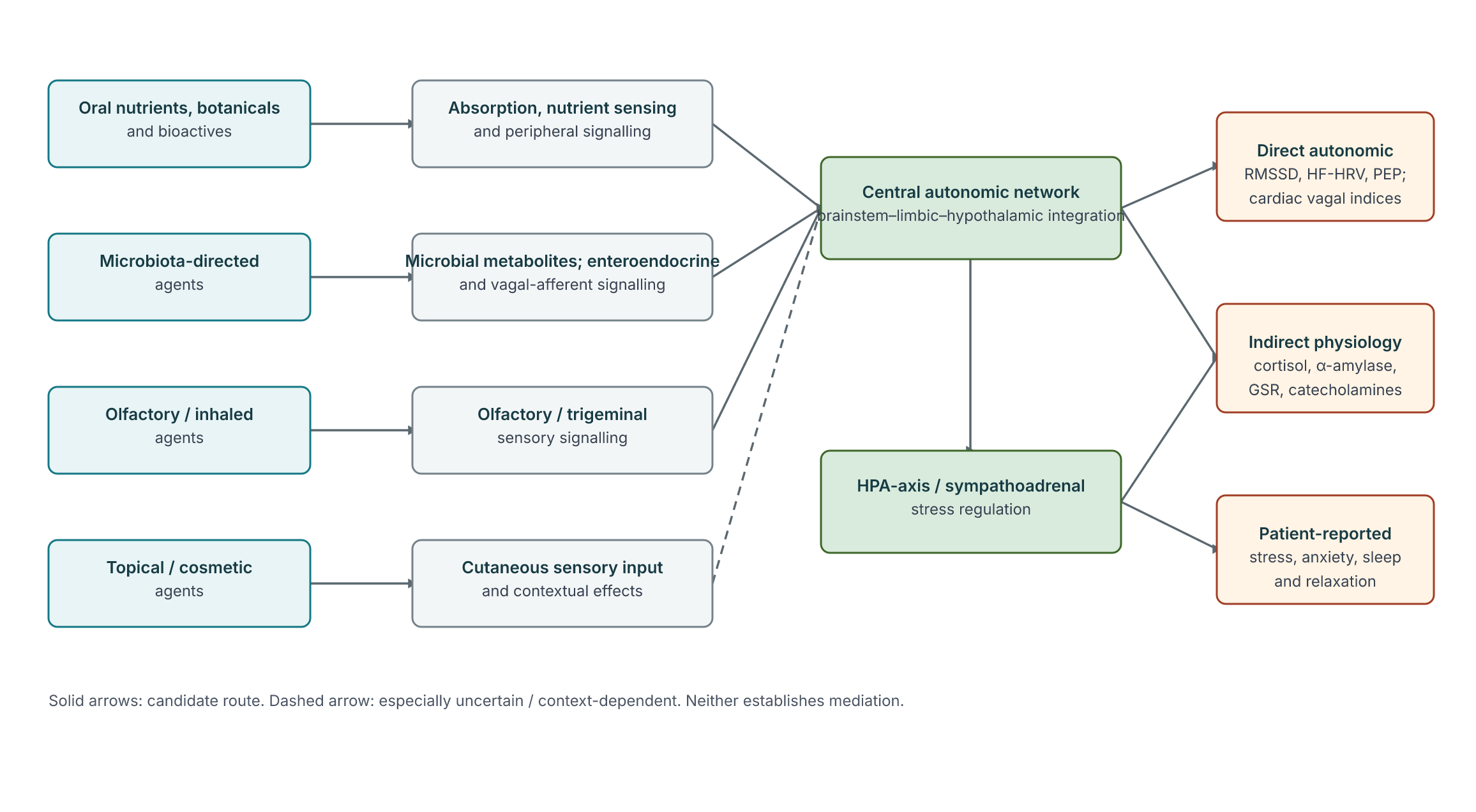
Obrázek 3. Koncepční rámec přehledu. Šipky označují biologicky pluzibilní kandidátské cesty, nikoli prokázanou mediaci v zahrnutých studiích. Dokument bude rozlišovat mezi mechanistickým zdůvodněním a klinickými důkazy o změnách autonomních biomarkerů nebo biomarkerů stresu.
Diagram je záměrně rámcem kandidátských drah. Kontrolované studie mohou prokázat změnu biomarkeru, ale málokdy prokáží, že ji zprostředkovala navrhovaná čichová, vagově-aferentní, imunitně-metabolická dráha nebo dráha osy HPA. Například autoři studie s mandlemi uvádějí několik možných živinových, cévních, baroreflexních, glykemických a stresových vysvětlení, namísto toho, aby identifikovali jediný mechanizmus.[1]
Hlavní mapa důkazů pro 50 látek
Pravidlo interpretace: „Přímý“ znamená, že alespoň jedna kontrolovaná studie u lidí hodnotila srdečně-autonomní opatření; neznamená to replikovanou účinnost. „Nepřímý“ znamená, že přezkoumané důkazy u lidí byly převážně neuroendokrinní, elektrodermální, EEG nebo na úrovni příznaků. „Kandidátská dráha“ je mechanistická hypotéza, nikoli potvrzený mediátor. Status v EU musí být ověřen pro každou složku zvlášť a nesmí být převáděn na tvrzení o autonomním zdraví. Toto pravidlo klasifikace se řídí hierarchií důkazů uplatněnou v tomto dokumentu, nikoli tvrzením o schválení nebo účinnosti. Rozdíl mezi interpretací HF/RMSSD a LF/HF vychází z diskuse o měření HRV v kontrolované studii s mandlemi.[1]
| # | Látka / standardizovaný prostředek | Třída / cesta | Kandidátská dráha | Nejvyšší úroveň výsledků | Důkazní postoj |
|---|---|---|---|---|---|
| 1 | Omega-3 EPA+DHA | Orální živina | Membránová elektrofyziologie; baroreflexní/srdeční reaktivita | Přímý | Kontextově specifický přímý signál |
| 2 | Celé mandle | Orální potrava | Hypotézy o vzorcích živin, cévních a baroreflexních mechanismech | Přímý | Jedna kontrolovaná zpráva o zátěžovém úkolu zjistila vyšší výkon HF oproti kontrole; ostatní indexy nebyly ovlivněny.[1] |
| 3 | L-theanin | Orální aminokyselina | Glutamátergní/GABAergní modulace stresu | Nepřímý | Nepřímý / smíšený |
| 4 | GABA | Orální aminokyselina | Enterická a periferní signalizace GABA | Přímý | Časné přímé důkazy |
| 5 | Taurin | Orální aminokyselina | Osmoregulace a autonomní modulace | Nepřímý | Nepřímý / smíšený |
| 6 | Glycin | Orální aminokyselina | Inhibiční neurotransmise a fyziologie spánku | Nepřímý | Nepřímý / smíšený |
| 7 | Hořčík | Orální minerál | Dráždivost a vaskulární tonus | Nepřímý | Nepřímý / smíšený |
| 8 | Vitamin E | Orální vitamin | Oxidační stres a vaskulární mechanismy | Přímý | Omezené přímé důkazy |
| 9 | Vitamin C | Orální vitamin | Redoxní modulace a modulace stresu osy HPA | Nepřímý | Nepřímý / smíšený |
| 10 | Dietní dusičnany / červená řepa | Orální bioaktivní látka z potravy | Oxid dusnatý a baroreflexní dráhy | Přímý | Časné přímé důkazy |
| 11 | Šťáva z vodního melounu | Orální bioaktivní látka z potravy | Citrulin-NO signalizace | Přímý | Časné přímé důkazy |
| 12 | Alfa-laktalbumin / tryptofanový hydrolyzát | Orální peptid | Serotonergní prekurzorová dráha | Přímý | Časné přímé důkazy |
| 13 | Laktoferrin | Orální peptid | Neuroimunitní signalizace a signalizace stresové osy | Nepřímý | Nepřímý / smíšený |
| 14 | Hydrolyzát alfa-s1-kaseinu (Lactium) | Orální peptid | Bioaktivní peptid / hypotéza GABA-A | Nepřímý | Nepřímý / smíšený |
| 15 | Fosfatidylserin + kyselina fosfatidová | Orální fosfolipid | Reaktivita osy HPA | Nepřímý | Nepřímý signál fyziologie stresu |
| 16 | Extrakt z Ašvagandy | Orální botanický prostředek | Hypotéza osy HPA a adaptace na stres | Nepřímý | Nepřímý / smíšený |
| 17 | Rozchodnice růžová (Rhodiola rosea) | Orální botanický prostředek | Adaptace na stres / monoaminergní hypotéza | Nepřímý | Nepřímý / smíšený |
| 18 | Bazalka posvátná | Orální botanický prostředek | Hypotéza adaptace na stres | Nepřímý | Nepřímý / smíšený |
| 19 | Meduňka lékařská | Orální botanický prostředek | GABAergní/cholinergní hypotéza | Nepřímý | Nepřímý / smíšený |
| 20 | Kůra magnólie | Orální botanický prostředek | Hypotéza GABA-A a osy HPA | Nepřímý | Nepřímý / smíšený |
| 21 | Šafrán | Orální botanický prostředek | Monoaminergní hypotéza a hypotéza osy HPA | Nepřímý | Nepřímý / smíšený |
| 22 | Extrakt z maqui | Orální polyphenol | Redoxní / endoteliální hypotéza | Přímý | Časné přímé důkazy |
| 23 | Enzymaticky ošetřený extrakt z chřestu | Orální botanický prostředek | Hypotéza stresové osy | Nepřímý | Nepřímý / smíšený |
| 24 | Všeobecně známý jako všehojovec štítnatý (Acanthopanax senticosus) | Orální botanický prostředek | Hypotéza adaptace na stres a srdečně-autonomní hypotéza | Přímý | Časné přímé důkazy |
| 25 | L-karnitin | Orální živina | Mitochondriální a srdeční metabolizmus | Přímý | Byl hlášen nepříznivý přímý signál |
| 26 | Lactobacillus gasseri CP2305 (tepelně ošetřený) | Postbiotikum | Hypotéza osy střevo–mozek / enteroendokrinně-vagová hypotéza | Přímý | Akutní přímý signál |
| 27 | Lactobacillus casei Shirota | Probiotikum | Dráha mikrobiom–imunita–HPA | Nepřímý | Nepřímý / smíšený |
| 28 | Lactiplantibacillus plantarum PS128 | Probiotikum | Dráha mikrobiom–neuroendokrinní systém | Nepřímý | Nepřímý / smíšený |
| 29 | Lactiplantibacillus plantarum P8 | Probiotikum | Dráha mikrobiom–stresová osa | Nepřímý | Nepřímý / smíšený |
| 30 | Bifidobacterium longum 1714 | Probiotikum | Dráha osy střevo–mozek a reaktivita na stres | Přímý | Časné přímé důkazy |
| 31 | Bifidobacterium longum NCC3001 | Probiotikum | Dráha střevo–mozek / imunitní dráha | Nepřímý | Nepřímý / smíšený |
| 32 | Lactobacillus helveticus R0052 + B. longum R0175 | Probiotikum | Dráha mikrobiom–HPA | Nepřímý | Nepřímý / smíšený |
| 33 | OMNi-BiOTiC STRESS Repair | Vícenámenné probiotikum | Mikrobiomově-autonomní dráha | Přímý | Přímý signál omezený na populaci |
| 34 | Saccharomyces boulardii CNCM I-1079 | Probiotické kvasinky | Mikrobiom a fyziologie stresu | Nepřímý | Nepřímý / smíšený |
| 35 | Inulin | Prebiotikum | Signalizace SCFA a enteroendokrinní signalizace | Nepřímý | Nepřímý / smíšený |
| 36 | Galaktooligosacharidy (GOS) | Prebiotikum | Dráha SCFA a mikrobiom–HPA | Nepřímý | Nepřímý / smíšený |
| 37 | Butyrát sodný | Postbiotikum / SCFA | Signalizace FFAR a enteroendokrinní signalizace | Nepřímý | Nepřímý / smíšený |
| 38 | Bergamotová éterická olej | Čichový prostředek | Čichově-limbicko-autonomní dráha | Přímý | Přímý, ale bez zaslepení senzorických složek |
| 39 | Levandulový éterický olej | Čichový / topický prostředek | Čichově-limbická nebo kožní senzorická dráha | Přímý | Malý / závislý na kontextu |
| 40 | Linalol | Čichový prostředek | Čichově-limbická dráha | Přímý | Časné přímé důkazy |
| 41 | Linalyl-acetát | Čichový prostředek | Čichově-limbická dráha | Nepřímý | Nepřímý / smíšený |
| 42 | β-karyofylen | Čichový prostředek | Čichově-senzorická hypotéza a hypotéza CB2 | Přímý | Časné přímé důkazy |
| 43 | Citral | Čichový prostředek | Čichově-senzorická dráha | Přímý | Časné přímé důkazy |
| 44 | Pomerančový éterický olej | Čichový prostředek | Čichově-limbická dráha | Přímý | Časné přímé důkazy |
| 45 | Yuzový éterický olej | Čichový prostředek | Čichově-limbická dráha | Přímý | Časné přímé důkazy |
| 46 | Neroliový éterický olej | Čichový prostředek | Čichově-limbická dráha | Nepřímý | Nepřímý / smíšený |
| 47 | Ylang-ylangový éterický olej | Čichový prostředek | Čichově-limbická dráha | Nepřímý | Nepřímý / smíšený |
| 48 | Cederwood / cedrol | Čichový prostředek | Čichově-senzorická dráha | Přímý | Časné přímé důkazy |
| 49 | Fytoncidní terpeny | Čichový prostředek | Čichově-senzorická dráha | Přímý | Časné přímé důkazy |
| 50 | Růžový éterický olej | Čichový prostředek | Čichově-limbická dráha | Nepřímý | Nepřímý / smíšený |
Interpretace vážená důkazy
Tato tabulka není záměrně žebříčkem produktů. Klíčovou otázkou u každého kandidáta je, zda je změna RMSSD, HF-HRV, RSA nebo PEP oproti placebu či kontrolní skupině replikována v populaci a kontextu relevantním pro zamýšlené použití. Přímé důkazy objevující se v jedné malé, akutní senzorové studii nebo ve formulaci s více složkami by neměly být přenášeny do spotřebitelských tvrzení týkajících se autonomního nervového systému. Dalším krokem v rukopisu je audit rodiny studií, po němž následuje extrakce velikosti účinku pouze v případech, kdy podkladové zprávy poskytují kompatibilní průměry, disperze, časové body a komparátory. Nutnost deduplikace důkazů na úrovni zpráv před kvantitativní syntézou je v auditu procesu přezkumu výslovně uvedena.[2]
Údaje ze zdrojového dokumentu